
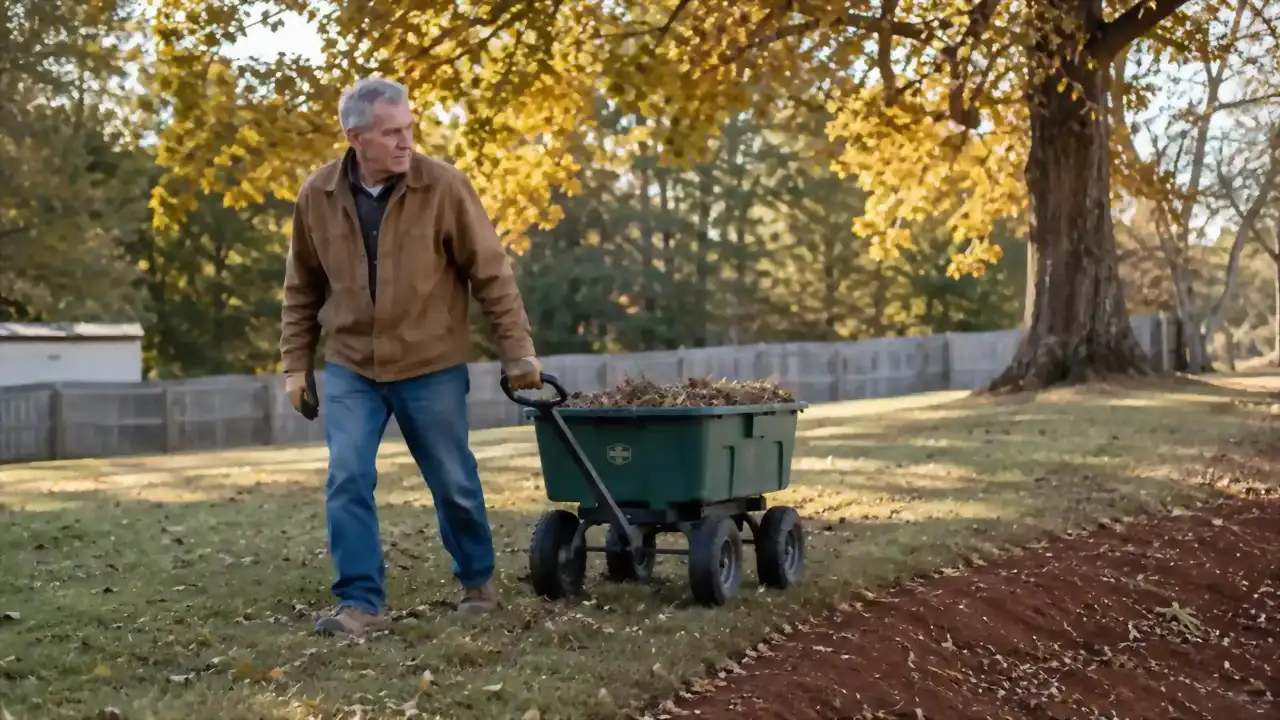
Two falls ago I finally got tired of dragging a bent-wheel wheelbarrow up the slope at the back of my lot, spilling half a load of leaves every third trip, and I asked my neighbor what he'd been hauling his mulch in all spring. He walked me over to his shed and showed me the Gorilla Carts poly dump cart he'd had for a season already, and I bought my own that same week. I've been gardening this same half-acre outside Burlington, North Carolina for thirty-eight years, and the willow oak that shades most of the yard drops leaves by the truckload every October and November. That cart has hauled two full falls of that mess now, plus mulch, firewood, and whatever the grandkids pile into it, and I still walk out to the shed and reach for the Gorilla Carts handle before I reach for anything else.
The wheelbarrow I'd used for decades never gave me much trouble on flat ground, but the slope at the back of the lot is where it always got the better of me. One wheel, a narrow frame, and a full load of wet leaves is a bad combination on a grade, and I tipped that wheelbarrow more times than I care to admit, usually right at the bottom of the slope where the mess was hardest to rake back up. Once I switched to the Gorilla Carts, that same slope stopped being a fight. Two wheels set wide apart and a low center of gravity meant I could pull a full load down that grade without feeling like it was about to get away from me.
The Quick Verdict
After two full fall cleanups and steady use the rest of the year, the Gorilla Carts poly dump cart has earned its spot as the tool I reach for first. It's not perfect on soft ground, but on the slope and red clay behind my house, nothing else I've owned has hauled this much this easily.
Amazon Check Today's Price →Tired of a Wheelbarrow That Tips on Every Slope?
I spilled more leaf piles than I can count before I gave in and bought a dump cart. Check today's price on the Gorilla Carts poly dump cart and see the current rating for yourself.
Amazon Check Today's Price on Amazon →How I've Used It
I'm not running a landscaping business, so this isn't a lab test. It's just what a retired man with a half-acre lot actually does with a cart, week after week, across two full growing seasons. That means hauling leaves from under the willow oak every fall, moving bagged and bulk mulch out to the two raised beds Delia and I built back in 2019, dragging deadfall and split firewood in from the tree line, and hauling off whatever gets pulled or pruned along the boxwood row that runs the length of the drive.
Sawyer is nine now and June just turned six, and both of them have taken to loading the Gorilla Carts with leaves while I rake, treating it like a game to see how full they can pack the bed before I have to haul it off. It's held up fine to that kind of use, and the sides are tall enough that neither of them has managed to bury themselves in leaves trying to climb in, though I keep an eye on that regardless. The cart has become as much a part of fall cleanup around here as the rakes themselves.
In a typical week during the growing season I'll pull the Gorilla Carts anywhere from a few times to a dozen, depending on what's going on in the yard. Fall is the heaviest stretch by far, with the willow oak dropping leaves steadily from mid-October through late November, and I'd guess I've moved somewhere north of a hundred loads through those two autumns alone, on top of the mulch and firewood hauling the rest of the year. That's a lot of wear to put on a poly bed and a set of tires, and it's held up better than I expected going in.
Two Falls of Leaves and What the Poly Bed Held Up To
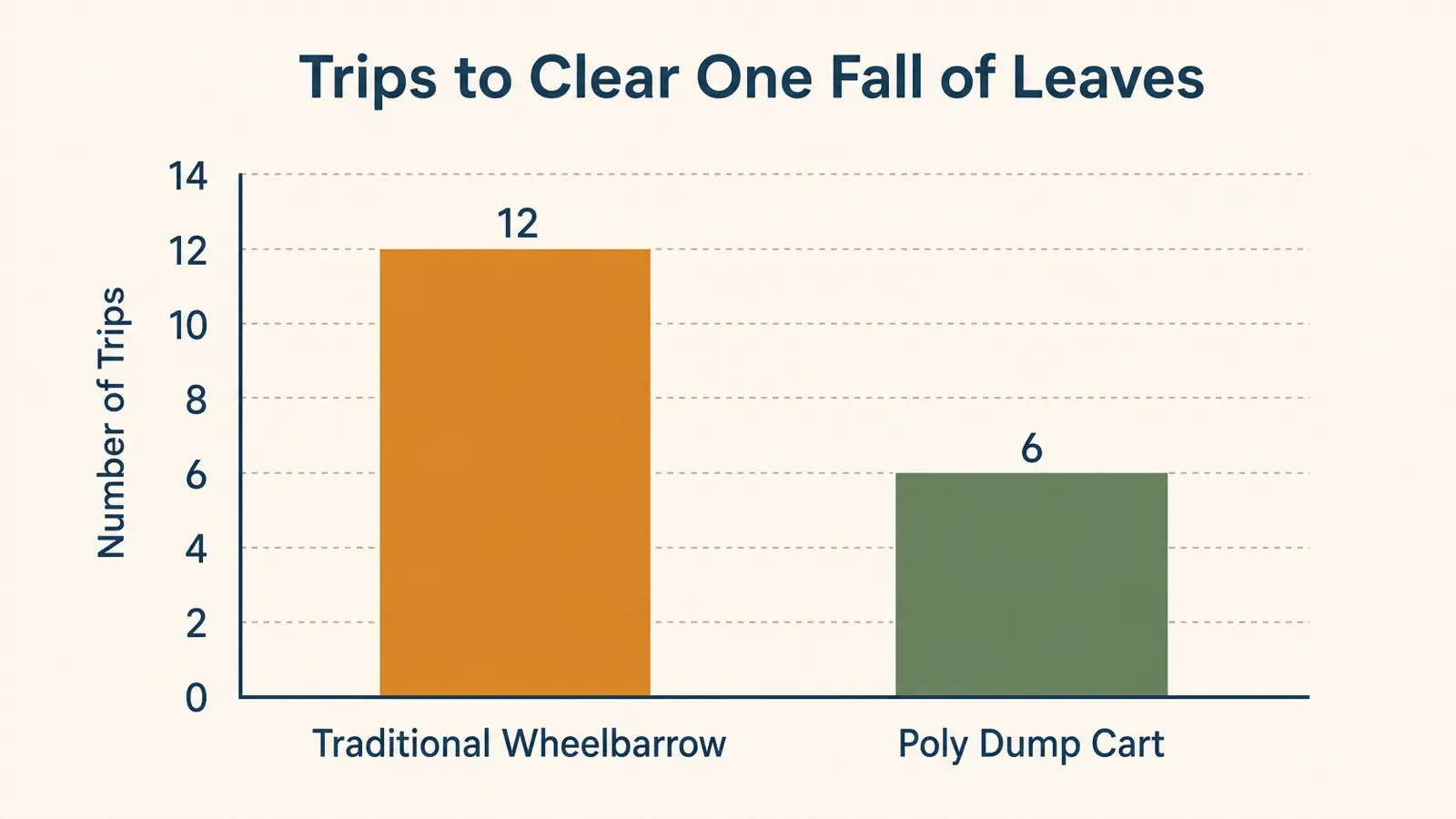
The willow oak in my yard is not a small tree, and when it lets go of its leaves it doesn't do it gently. Some years I'm raking under that canopy three or four weekends straight, and before the Gorilla Carts I was making that same trip with a wheelbarrow that held maybe a third as much per load. The four cubic foot bed on this cart isn't enormous, but it's a real jump from a standard wheelbarrow, and on the slope behind the house that difference meant half the trips to clear the same pile.
Wet leaves are heavier than people expect, especially after a few days of rain sitting in a pile, and I loaded the Gorilla Carts full of soaked leaves more than a few times over these two seasons without the bed flexing or cracking under the weight. The poly material has stayed rigid where I'd expect a cheaper plastic to start sagging, and there's no fading or brittleness showing yet even after two summers sitting out near the shed between uses.
The one thing I've noticed with leaves specifically is that a packed load of wet leaves near the top of the bed can be a little top-heavy on uneven ground, so I've learned to load it a bit fuller toward the front over the axle rather than piling everything high in the back. That's a small adjustment, not a flaw in the cart, but it's the kind of thing two full falls of hauling teaches you that a first impression never would.
The Dump Mechanism: Why It Beats Tipping a Wheelbarrow on a Slope
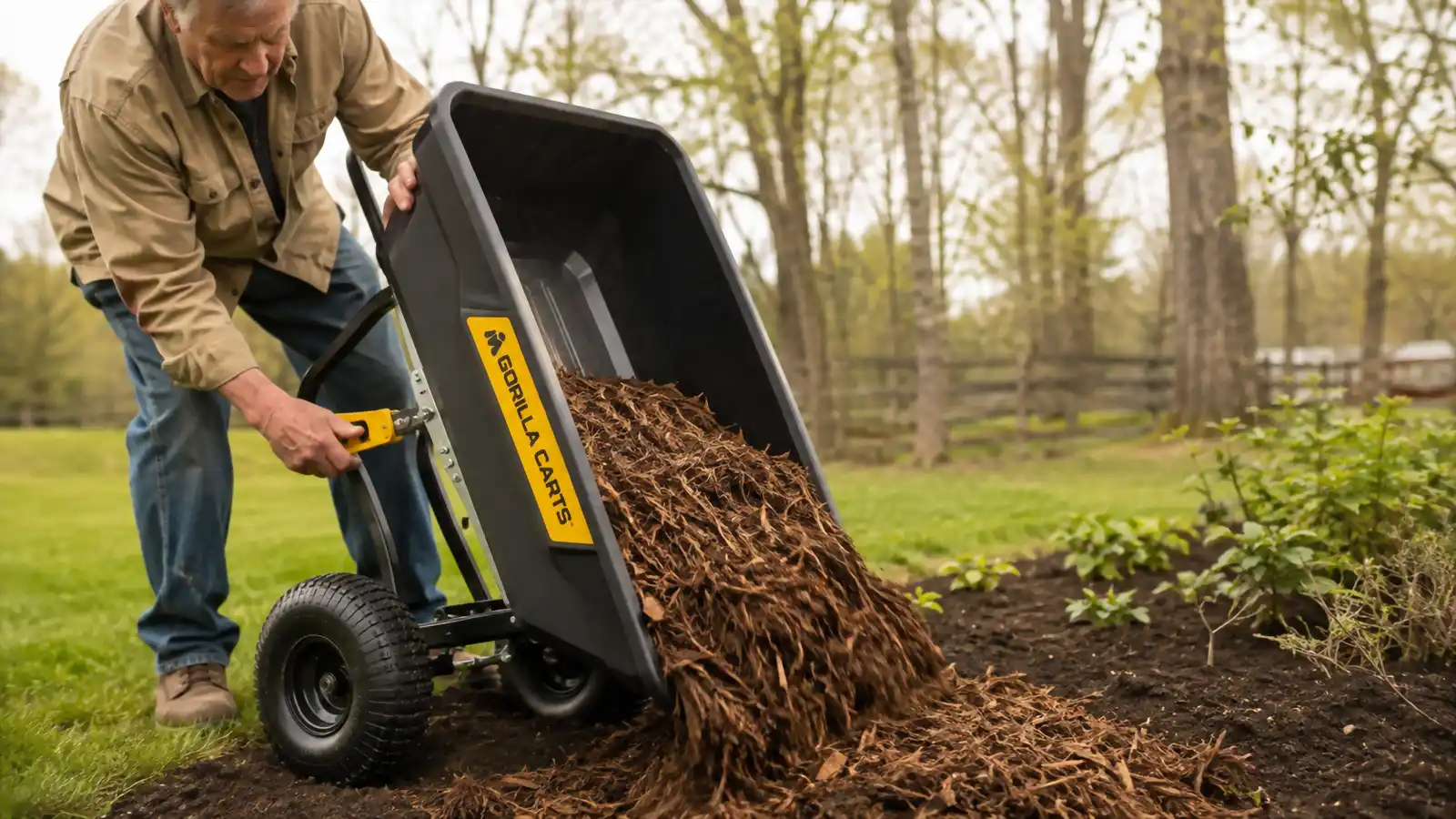
The whole reason I looked at a dump cart instead of just replacing the wheelbarrow was the release mechanism. With a wheelbarrow, dumping a load means lifting the handles and tipping the entire weight forward, which on flat ground is fine but on the slope at the back of my lot always felt like I was one bad step from losing control of it. The Gorilla Carts bed tilts forward on its own hinge when you pull the release, so I'm not fighting the weight of the load with my back and shoulders the way I was before.
That matters more to me at seventy-one than it would have twenty years ago. I don't have any specific injury I'm working around, but I notice fatigue faster than I used to, and a tool that takes the lifting out of the equation is one I'll actually keep using instead of putting off the chore for another day. Dumping a full load of mulch or leaves with the Gorilla Carts takes maybe five seconds and almost no effort on my part, where the wheelbarrow version of that same job left me feeling it in my lower back by the end of an afternoon.
The release lever itself has held up fine across two seasons of near-daily use during peak months. I've had no trouble with it sticking or needing extra force to trigger, even after the mechanism has been rained on and left out overnight more than once when I forgot to roll it back into the shed.
Hauling Mulch, Firewood, and Everything Else Besides Leaves
Leaves are the heaviest single use, but they're not the only job the Gorilla Carts has done around here. Every spring I move bagged mulch and topsoil out to the raised beds, and this cart handles four or five bags at once without the tires bogging down, even on the red clay path that runs from the driveway back to the beds. That clay turns soft and rutted after a rain, and the pneumatic tires on this cart have rolled through it without getting stuck the way a narrow hand truck wheel would.
I've also used it to haul split firewood in from the tree line at the edge of the property, and to move deadfall limbs after storms knock branches out of the willow oak. It's not a wheelbarrow substitute for delicate work like moving potted plants, the poly bed is a little too deep and boxy for that, but for anything you'd shovel, stack, or pile, the Gorilla Carts has become the first thing I grab out of the shed.
Wear After Two Seasons: Wheels, Bed, and the Frame
I'll be honest about the wear, because a two-season review that skips it isn't worth much. The tires on the Gorilla Carts are pneumatic, which means they need air the same as a bicycle tire, and I've had to top one of them off twice over two seasons. That's a minor chore, not a defect, but it's worth knowing going in if you're used to solid tires that never need attention.
The frame itself, the metal support underneath the poly bed, shows some surface rust starting where I've left it out in the rain instead of rolling it back under the shed roof. That's on me more than the cart. Where I have kept up with putting it away, the metal has stayed clean. The poly bed shows no cracks or stress marks anywhere, even at the corners near the hinge, which is usually the first place a plastic bed gives out under repeated heavy loads.
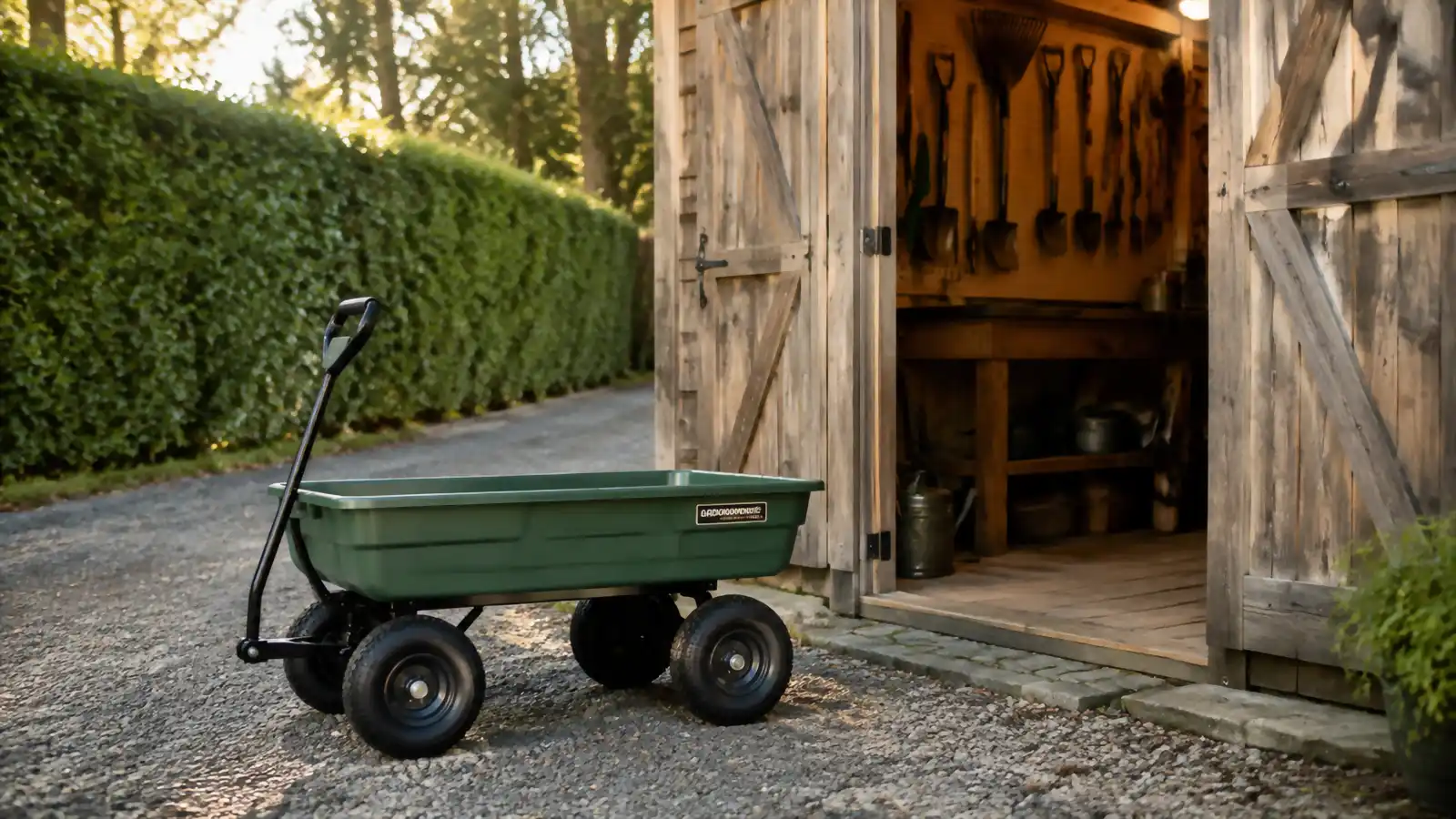
The handle and the folding mechanism that lets the cart stand upright for storage have stayed tight, with no wobble or loose bolts after two seasons of being folded and unfolded probably a hundred times or more. I check the bolts once each spring before the season really gets going, more out of habit than because anything has actually worked loose.
What I've Compared It To
I still keep the old wheelbarrow around for small jobs where a big cart is more than I need, mostly moving a few shovelfuls of dirt right next to where I'm digging. But for anything that needs to travel across the yard, the Gorilla Carts has replaced it almost entirely. I get into the specific tradeoffs between the two, and where the wheelbarrow still wins, in my honest review of this same cart, if you want the fuller picture before you decide.
If you're still weighing whether a dump cart is worth adding to your own shed at all, I laid out the specific reasons this one earns its keep on my lot in 10 reasons a garden dump cart earns its keep. Between the two pieces, I think it covers most of what I wish I'd known before I bought mine.
What I Liked
- Two-wheel design tracks stable on the slope and red clay behind my house where a wheelbarrow always tipped
- Quick-release dump mechanism takes the lifting out of emptying a full load
- Poly bed shows no cracking or stress marks after two full fall cleanups
- Pneumatic tires roll through soft, rutted clay without getting stuck
- Folds flat for storage and the hinge and bolts have stayed tight across two seasons
Where It Falls Short
- Pneumatic tires need occasional air, unlike a solid-tire hand truck
- Frame shows surface rust where it's been left out in the rain instead of stored under cover
- Bed can feel top-heavy with a fully packed load of wet leaves on uneven ground
- Not ideal for delicate loads like potted plants, the deep boxy bed is built for bulk material
The first fall I used it, I remember standing at the bottom of the slope with a full load and realizing I hadn't braced for it to tip. That's when I knew the Gorilla Carts was going to outlast whatever was left of my old wheelbarrow.
Who This Is For
If you've got a yard with any real grade to it, or a season where leaves, mulch, or firewood pile up faster than a wheelbarrow can keep pace with, the Gorilla Carts is worth the money. Anyone dealing with red clay or soft ground that swallows a narrow wheel will notice the difference the pneumatic tires make right away. It's also a good fit for anyone whose back or shoulders aren't up to tipping a loaded wheelbarrow anymore, since the dump lever does most of that work for you.
Who Should Skip It
If your yard is small and flat and your hauling amounts to a few pots or a bag of mulch twice a year, a basic garden cart or even a good wheelbarrow will do that job just fine. This is a tool built for volume and terrain, and if you don't have much of either, you won't get your money's worth out of the extra capacity and the dump feature.
Two Falls In, and It's Still My First Choice Out of the Shed
I've replaced plenty of tools in thirty-eight years of gardening this lot. This isn't one of them. See the current price and rating on the Gorilla Carts poly dump cart for yourself.
Amazon Check Today's Price on Amazon →