
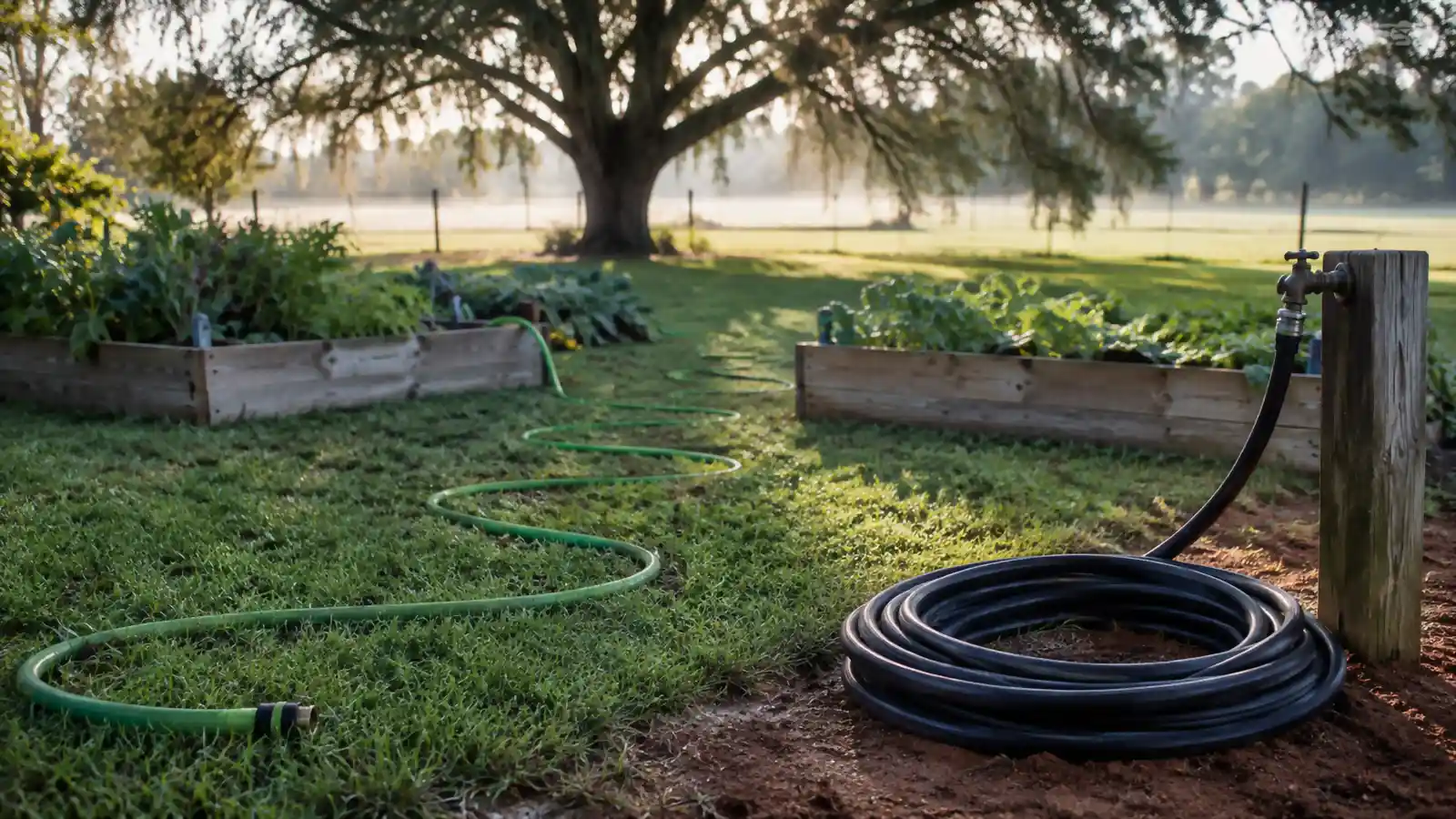
I spent thirty-eight years dragging a heavy rubber hose around this half-acre outside Burlington, and last spring I finally put a Flexi Hose into rotation to see if it could actually replace it, not just handle the easy jobs on a good-weather afternoon. The short answer, after a full season of watering the two raised beds and the boxwood row with both hoses in play: the Flexi Hose is the one I reach for most mornings now, and it is the one I would tell a fellow retiree with a bad shoulder to buy without much hesitation. That is not the same as saying it is the better hose in every single way, because it is not, and I would rather tell you that up front than let you find it out the hard way.
This comparison is not about which one has better marketing behind it, and it is not a brand-loyalty piece either way. It is about who is standing at the spigot every morning and what that person actually needs. I am seventy-one, I have a slope at the back of my lot, and some days my shoulder tells me exactly how much a hose weighs before I even pick it up off the ground. If that sounds like your situation, the case for the Flexi Hose is built around exactly that kind of morning. If instead you want one hose you buy once and never think about again for a decade or more, keep the heavy rubber hose you already have, or go buy one, because that is still the more honest answer for that specific job.
I ran both hoses side by side for most of a growing season instead of just switching cold turkey, mostly because I did not trust my own first impression. The Flexi Hose felt like a gimmick the first time I saw one at the hardware store years ago, all promise and no substance, the kind of thing that looks great on a shelf and falls apart the first time real work gets asked of it. So I kept the heavy rubber hose on its reel by the spigot and ran the Flexi Hose alongside it for the raised beds and the boxwoods, switching between them depending on the job, until the pattern of where each one actually earned its keep became obvious rather than a guess.
| What Matters | Flexi Hose | Heavy Rubber Hose |
|---|---|---|
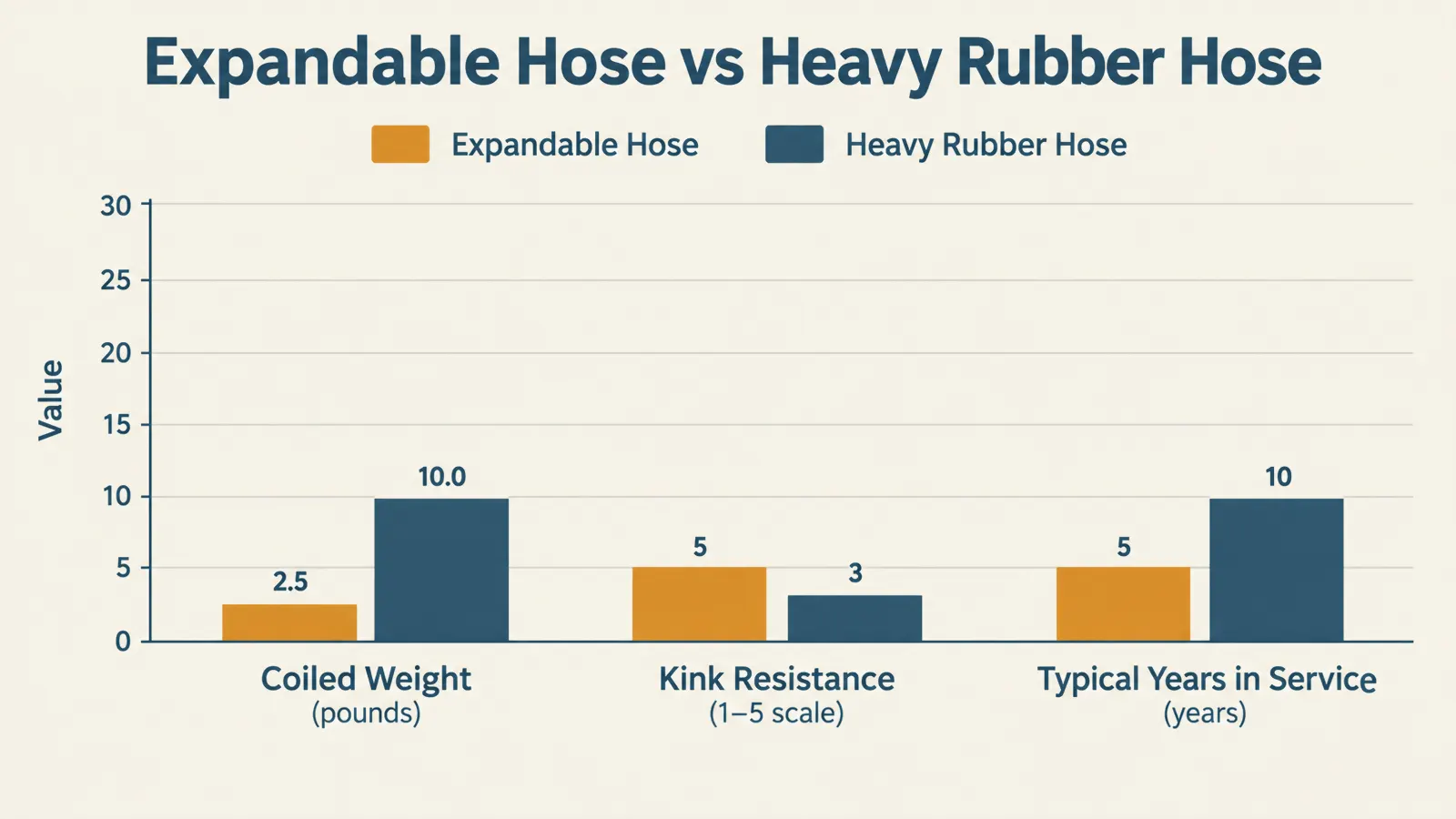
| Weight to drag across a yard | Light enough to carry one-handed, even fully expanded | Heavy, you feel every foot of it by the far bed |
| Storage space needed in the shed | Collapses small enough to hang on a single pegboard hook | Needs a reel or a big coil, takes up a real corner |
| Resistance to kinking on tight turns | Nothing rigid enough in the tube to hold a kink | Kinks and crimps on sharp turns around beds and corners |
| Comfort for a gardener with shoulder or back strain | Noticeably easier on the shoulder over a full season | Adds up to real fatigue hauling it daily |
| Years of service before real failure | Seasons, not decades, before the fabric sleeve wears | Can run a decade or more with basic care |
| Standing up to hours in full summer sun | Fabric cover and inner tube both stress under heat | Thick rubber wall shrugs off sun exposure |
| Resistance to snags and abrasion on rough ground | Fabric sleeve can wear through on gravel or sharp edges | Thick single-wall construction resists cuts and scrapes |
| Ease of patching or repairing a problem | A split at the fitting collar is hard to fix for good | A basic patch kit fixes most damage on the spot |
| Hooking up to a standard spigot and nozzle | Standard 3/4 inch brass fittings, no special hardware | Standard 3/4 inch brass fittings, no special hardware |
Where Flexi Hose Wins
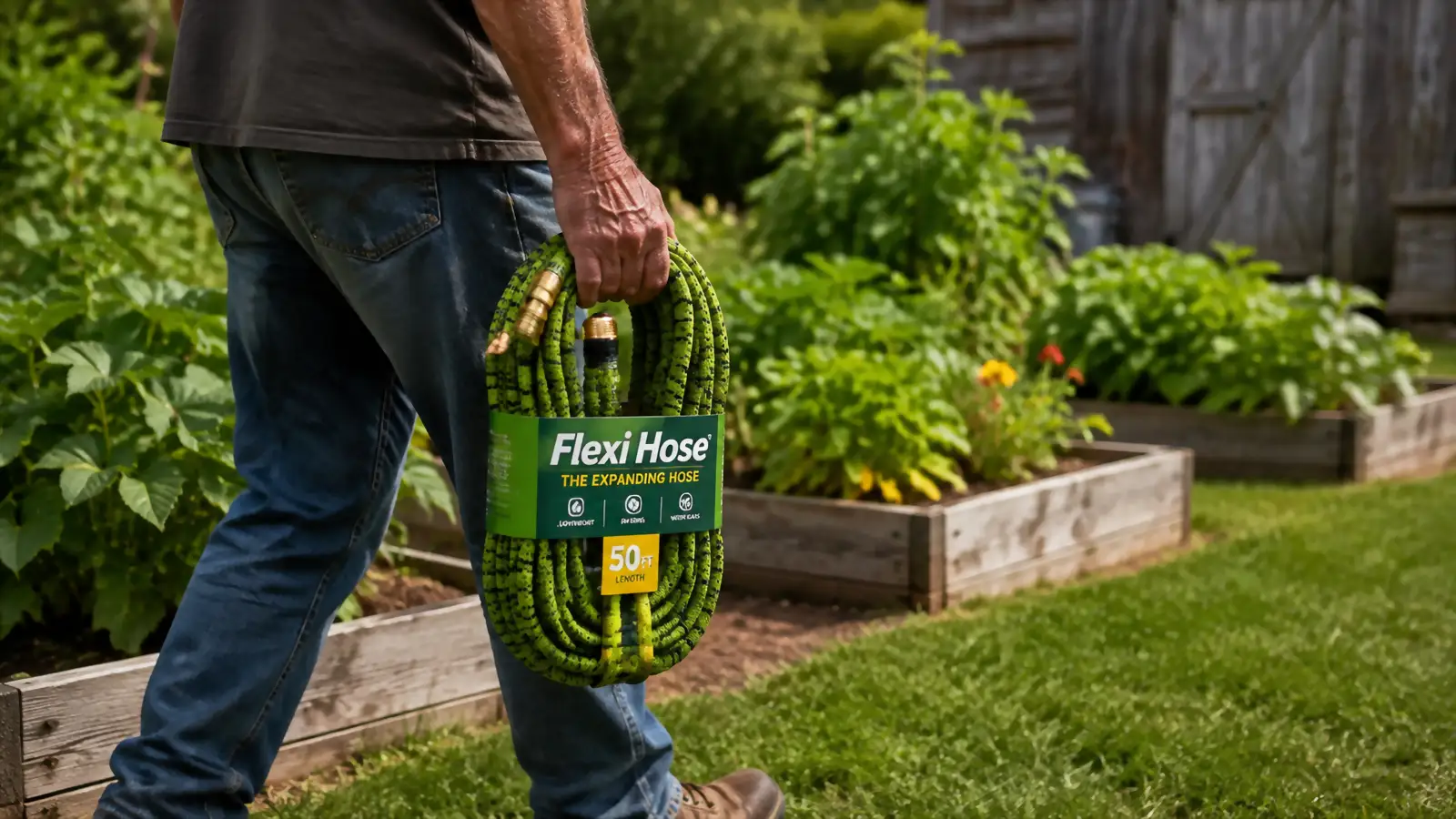
The first thing I noticed with the Flexi Hose was how little it weighed once it filled with water and stretched out across the yard toward the raised beds. My old rubber hose felt like dragging a length of chain by the time I got it to the far bed, especially with the slope at the back of the lot working against me the whole way. The Flexi Hose, even fully expanded, is light enough that I can carry a loop of it in one hand while I hold the nozzle in the other. For a man dealing with shoulder fatigue and a knee that complains some mornings, that difference showed up every single day, not just on the good days when everything about the yard felt easy.
The Flexi Hose also does not kink the way the heavy rubber hose does on tight turns. Between the two raised beds and through the narrow gap in the boxwoods, the rubber hose used to catch and crimp on itself constantly, and I would have to walk back and unkink it before I could keep watering. There is nothing stiff enough in the Flexi Hose's inner tube to hold a kink that way, so the water just keeps moving no matter how the hose bends around a corner. And when the water shuts off, it shrinks back down small enough to hang on a single hook on my shed's pegboard wall, instead of taking up a third of a corner the way the old rubber hose's reel always did.
It also happens to be the hose I trust with the grandkids. Sawyer is nine and June just turned six, and both of them think watering the raised beds is a job worth fighting over, which means a hose in this yard gets dragged, dropped, and stepped on more than any product listing accounts for. A heavy rubber hose in small hands is a real chore to manage, and I have watched June struggle to even pull one across the grass. The Flexi Hose is light enough that either grandkid can carry it themselves, which turns a watering chore into something they actually want to help with, and that matters to me more than most spec sheets do.
There is also the matter of packing the Flexi Hose away at the end of the season. Come late November, when I am winterizing the beds and getting ready for a stretch of cold nights, coiling down a heavy rubber hose for storage is its own small chore, one that usually leaves my hands stiff and my back sore for an hour afterward. The Flexi Hose collapses on its own once the water drains out, so putting it away is closer to hanging up a coat than wrestling a reel into a corner. Small thing, maybe, but it is one more place where the lighter design pays off exactly when the season's work is catching up with me.
Where the Heavy Rubber Hose Wins
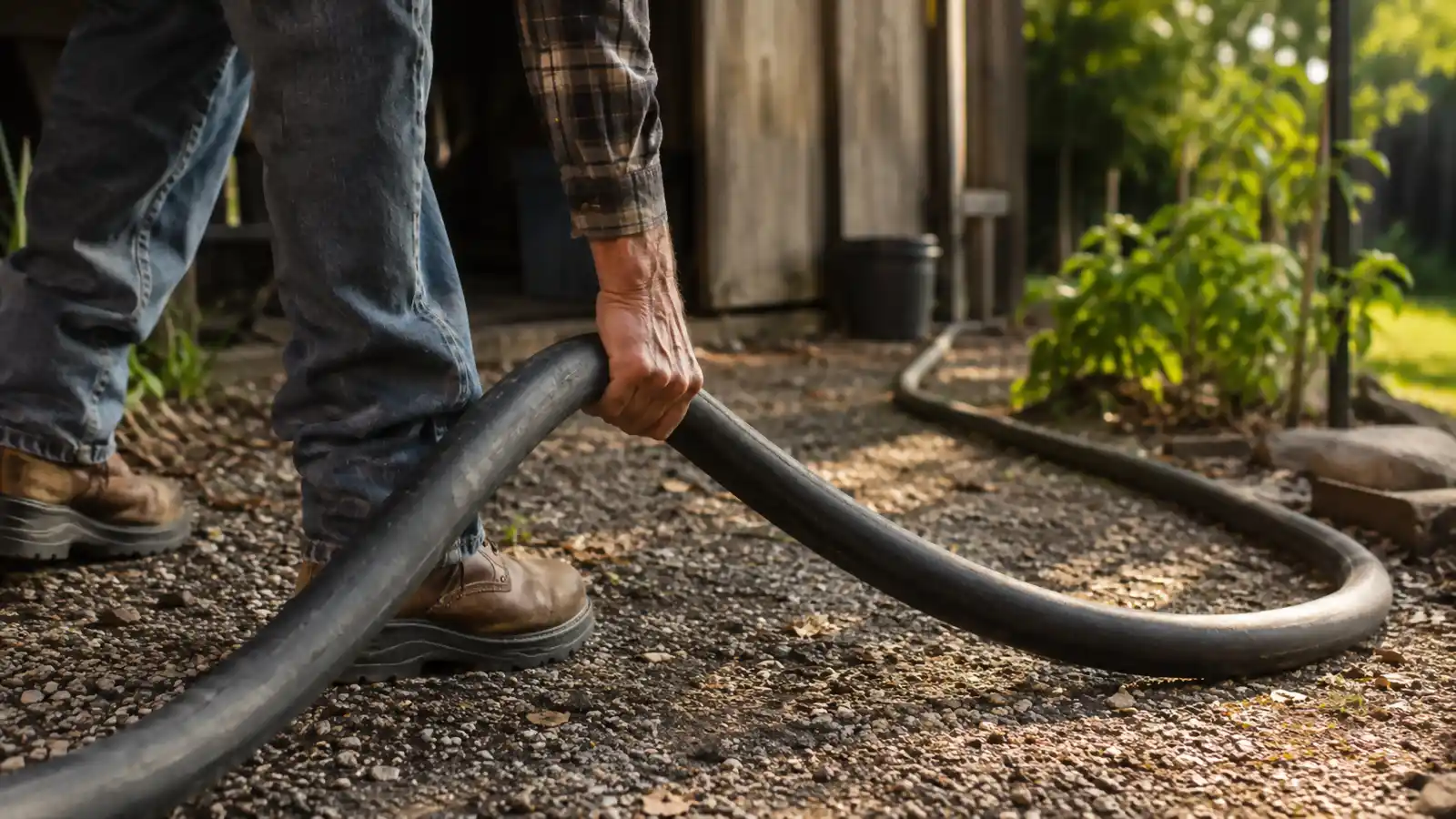
Where the heavy rubber hose earns its keep is simple: it lasts. I ran the same rubber hose for the better part of a decade before I ever considered replacing it, dragging it across gravel, over the edge of the raised beds, and past willow oak roots that break through the lawn every spring. It never developed a soft spot or a split anywhere along its length in all those years of daily use. A heavy rubber hose is built from one thick wall of material, not a fabric sleeve wrapped over an inner tube, and that construction shrugs off the kind of daily abrasion that eventually wears through a lighter hose like the Flexi Hose.
Full sun matters here too. I leave hoses out more than I probably should, and a rubber hose coiled in the July sun for a few hours does not develop the weak spots that showed up near the Flexi Hose's brass fitting after a summer of heat and daily flexing. The heavy rubber hose also tolerates warm water sitting inside it far better, since the thick wall does not stress and soften the way a lighter fabric-and-tube design can after repeated heat cycles across a long Piedmont summer. If your hose spends more time baking in the sun than it does coiled in the shade, that thick rubber wall is doing real work you might not notice until it is missing.
If something does go wrong with a rubber hose, a basic patch kit and a pocketknife will usually fix it right there in the yard, and the repair holds for years afterward. When I have gone looking for a way to actually repair a hose problem instead of just working around it, the heavy rubber hose has always been the easier one to save. A split near the Flexi Hose's fitting collar, by contrast, is a much harder thing to fix for good, and a strip of rubber tape gets you through a season at best, not a permanent solution.
There is also something to be said for a tool that does not ask you to think about it. My old rubber hose spent ten years doing exactly one thing, moving water from the spigot to wherever I needed it, without a single season where I had to inspect it for wear before trusting it. That kind of dependability has real value for a gardener who would rather spend the time actually working the beds than checking the equipment. If you want to hand a tool down and know it will still be doing its job long after you stopped thinking about when you bought it, the heavy rubber hose is built for exactly that kind of long, uneventful service.
Tired of Dragging a Hose Like It's a Length of Chain?
I switched to the Flexi Hose to take the weight off my shoulder on daily watering runs between two raised beds and a boxwood row. See today's price and the current rating on Amazon before you decide.
Amazon Check Today's Price on Amazon →Who Should Buy Which
If your shoulder or your back complains about hauling a heavy hose across the yard, or you are tired of wrestling a hose reel into a crowded corner of the shed, the Flexi Hose is the one to buy. It made watering the raised beds and the boxwood row feel like less of a chore for most of a growing season, and for a lot of gardeners that tradeoff is worth it even knowing the fabric sleeve will eventually show wear. I go into exactly where that wear shows up first in the honest review, and I cover a full eight months of daily use, month by month, in the long-term review, so you can see for yourself before you buy.
If you want a hose you buy once and forget about, one that can survive being dragged across gravel by grandkids or left out in full sun without a second thought, the heavy rubber hose is still the more honest choice for that specific job. Anyone with a bigger property, a habit of leaving hoses out through a full summer, or a real need for something they can patch and keep running for a decade should stick with the heavy rubber hose, or at least keep one in reserve even after trying the Flexi Hose.
I keep both on hooks in my shed now, which is probably the most honest verdict I can give you. The Flexi Hose handles the daily rounds, the raised beds, the boxwoods, the jobs where I am out there most mornings and my shoulder is doing the deciding. The heavy rubber hose stays close by for anything rougher, longer stretches in full sun, or a job where I need to know the hose will still be there next spring without me checking on it first. Owning one does not mean giving up on the other, and for most of this past season that arrangement worked better than picking just one ever would have.
I am not going to tell you the Flexi Hose is the last hose you will ever own, because it probably is not, and a heavy rubber hose will very likely outlast it by a wide margin. What I can tell you, after watering this half-acre with both kinds for a very long time, is which one I actually reach for on an ordinary Tuesday morning. Lately, most weeks, that is the Flexi Hose, with the heavy rubber hose still hanging nearby on its own hook for the jobs where weight does not matter nearly as much as toughness does.
See Why the Flexi Hose Stays by My Spigot Most Mornings
It will not outlast a heavy rubber hose, and I say that plainly. But if a lighter, easier-to-store hose sounds like what your shoulder needs this season, check today's price and current rating on Amazon.
Amazon Check Today's Price on Amazon →