
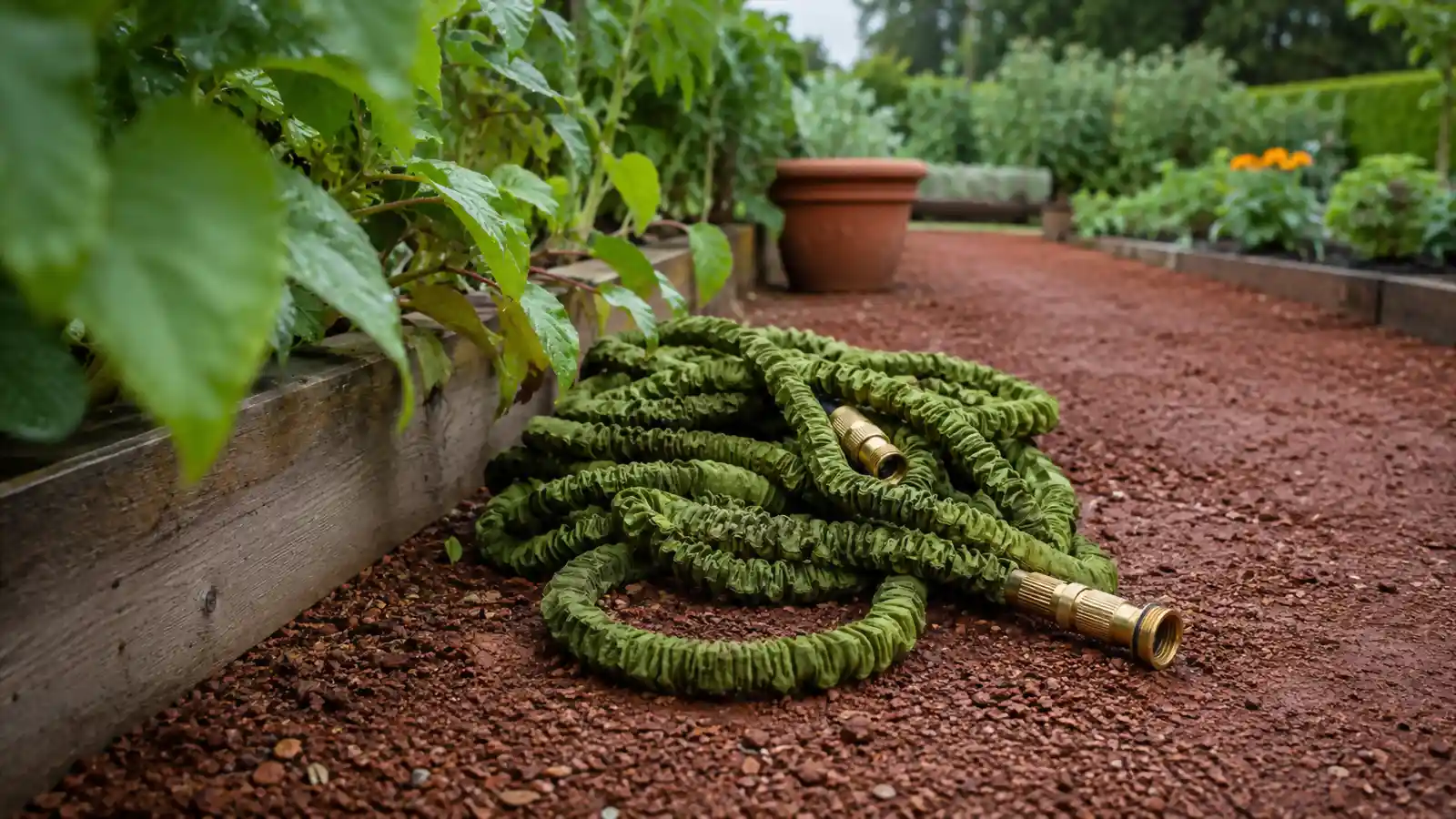
Before I ever hooked a Flexi Hose to my spigot, I read the same five-star and one-star reviews everybody else reads, and neither side told me what actually happens once you use one for real, on real red clay, with two grandkids underfoot. I've had this hose in daily rotation at my place outside Burlington, North Carolina since last March, watering the two raised beds Delia and I built back in 2019 and a row of boxwoods along the drive, and I want to lay out the parts that surprised me, the stuff that never shows up in a five-star headline.
This isn't the season-long wear story. I already wrote that one up separately after a full growing season with this same hose. This is the part that actually matters before you place an order: how the Flexi Hose behaves at low pressure, what happens the instant you shut the water off, the brass fitting and the little rubber washer nobody mentions, and why a stray boxwood twig or a bump from the garden cart wheel worries me more than most reviewers let on.
None of this comes from a single afternoon with the box fresh off the porch. It comes from months of ordinary use, the kind where you stop paying close attention and just water the beds, which is exactly when a hose shows you its real personality instead of the one it puts on for the unboxing video.
The Quick Verdict
The Flexi Hose does what it promises for most everyday watering, but there are five or six real quirks nobody warns you about before you buy, and I'd rather you hear them from me than find out the hard way.
Amazon Check Today's Price →Know What You're Getting Before You Hook It to the Spigot
I've run the Flexi Hose through a full season of raised-bed watering and grandkid chaos. See today's price and the current rating on Amazon, then read what nobody puts in the listing photos.
Amazon Check Today's Price on Amazon →How I've Used It
My routine hasn't changed much since I brought it home. I water the two raised beds most mornings, hit the boxwood row along the drive twice a week or so, and let June, who's six, and Sawyer, who's nine, take turns with the nozzle whenever they're over, which means the Flexi Hose gets dragged, dropped, and occasionally left coiled up in the sun far longer than I would have left it myself.
I run it off the same spigot on the back of the house that I've used for thirty-eight years, and I pay attention to details a lot of reviewers skip past. How does it feel in my hand at the far end of the run. What happens the second I twist the spigot off. Does the fitting leak after the fortieth time a six-year-old cranks it on too hard. Those are the questions this review actually answers.
I also make a point of using the Flexi Hose the way an actual retiree with a slope at the back of the lot uses a hose, not the way a warehouse tester runs one on a flat concrete floor. That means uneven ground, a hedge in the way, a cart rolling through, and kids who forget where they set the nozzle down. It's a rougher test than most reviews get, and it's the reason some of what follows won't show up anywhere else.
None of what follows is a complaint about the Flexi Hose being a bad hose. It's a genuinely useful tool for a yard like mine. But there's a real gap between what the marketing photos show and what happens on a Tuesday morning with actual water pressure, actual sun, and an actual boxwood hedge in the way, and that gap is what I want to close for you here.
What Nobody Tells You About Water Pressure
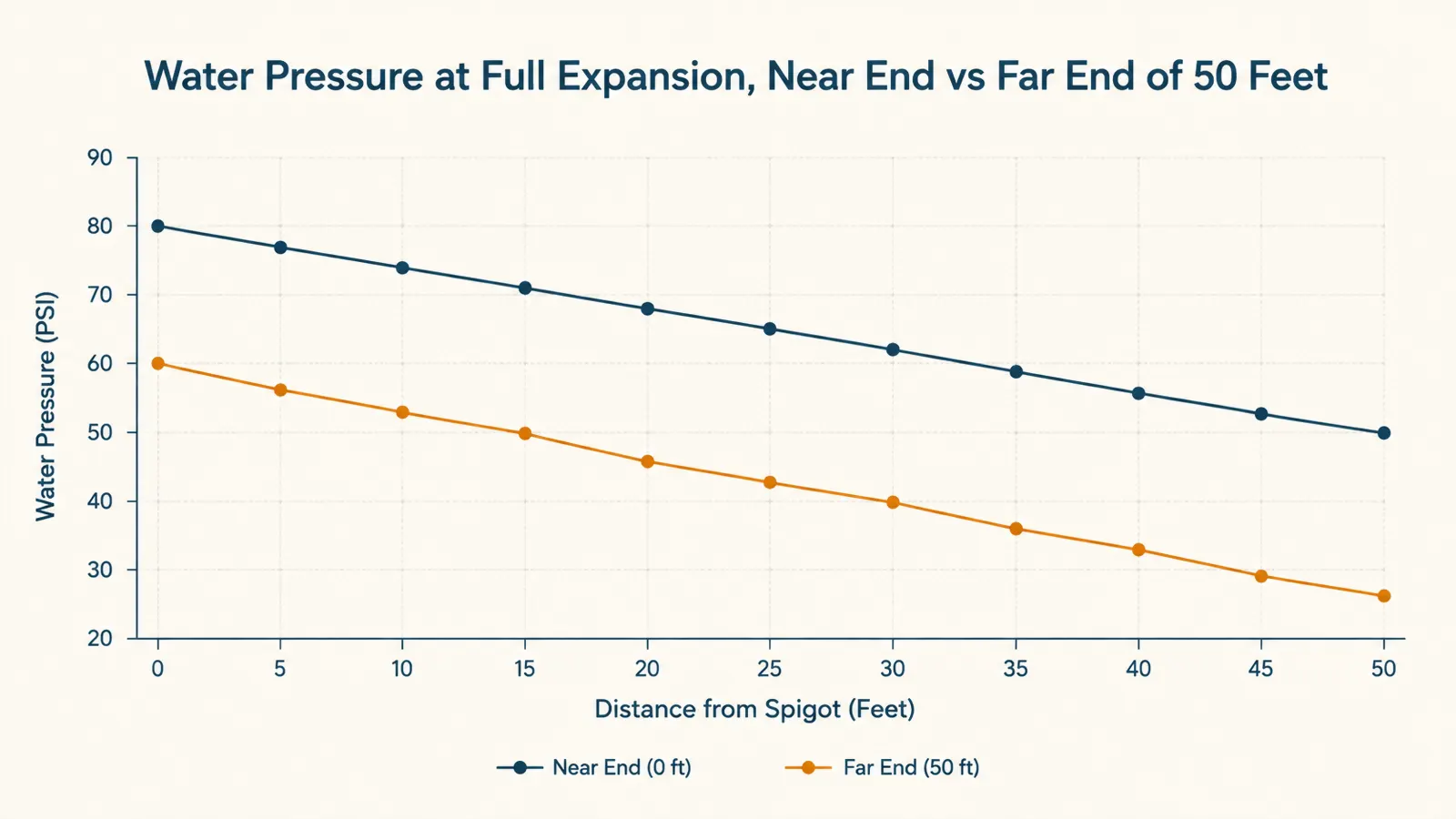
The first thing that caught me off guard with the Flexi Hose is how noticeably the pressure drops once the hose is fully expanded and you're at the far end of its fifty feet. Near the spigot, the flow is strong, plenty for rinsing a trowel or filling a watering can in a hurry. By the time I'm out at the second raised bed, which sits closer to the far end of the run, the stream is softer, more of a shower than a spray, even with the nozzle set to its tightest pattern.
Nobody tells you this because it's not the kind of thing that shows up in a thirty-second product video. It only shows up when you're standing at the end of your own hose run trying to knock dried mud off a wheelbarrow tire and wondering why the water feels weak. It's not a defect. It's just how the expandable design moves water through a wider, softer inner tube instead of a rigid one, and it's worth knowing before you assume the Flexi Hose will hit every corner of a larger yard with the same force.
Household water pressure plays into this more than I expected too. On mornings when Delia's got the washing machine and the kitchen tap both running, I can feel the Flexi Hose lose a noticeable amount of push, more than my old rubber hose ever seemed to. A rigid hose doesn't have to expand before it delivers water, so it's less sensitive to a dip in supply. This one is, and it's worth timing your watering around the rest of the household if that kind of thing bothers you.
There's also a difference between kinking and collapsing that took me a season to really understand. A rigid rubber hose kinks, meaning it folds and pinches the water flow off entirely until you walk back and straighten it out. The Flexi Hose doesn't kink that way. On a tight turn it collapses a little instead, going slightly flat rather than crimping shut, and the water usually keeps moving even when the hose looks pinched from the outside. That's a real advantage on the tight turns around my raised beds, but the flow does slow down noticeably in those spots, which surprised me the first few times it happened.
The Snap-Back Nobody Warns You About
Here's the one that actually made me laugh the first time it happened. The moment you shut the water off, the Flexi Hose starts shrinking back down almost immediately, and if there's any slack lying across the yard, it pulls that slack toward you fast. The first week I had it, I shut the spigot off from the far end near the boxwoods, and the hose yanked a small trowel clean off the edge of the raised bed and dragged it three feet through the mulch before I even turned around.
It's done the same thing to June's little plastic watering can twice, and once it caught the leg of my garden kneeler and tipped it over. None of that is dangerous, just mildly annoying, but it's exactly the kind of thing nobody mentions in a review because it sounds too small to matter, until it's happened to you three times in a week and you start laying the hose out differently on purpose.
The fix is simple once you know it's coming. I've learned to shut the water off at the spigot end whenever I can, rather than at the nozzle, and to keep anything I care about a couple feet clear of wherever the hose is lying before I turn the valve. It's a small habit, but it took me getting caught off guard by the Flexi Hose more than once to build it, and I'd rather you build it on the first afternoon than the fourth.
The Brass Fitting and the Washer Everyone Skips Over
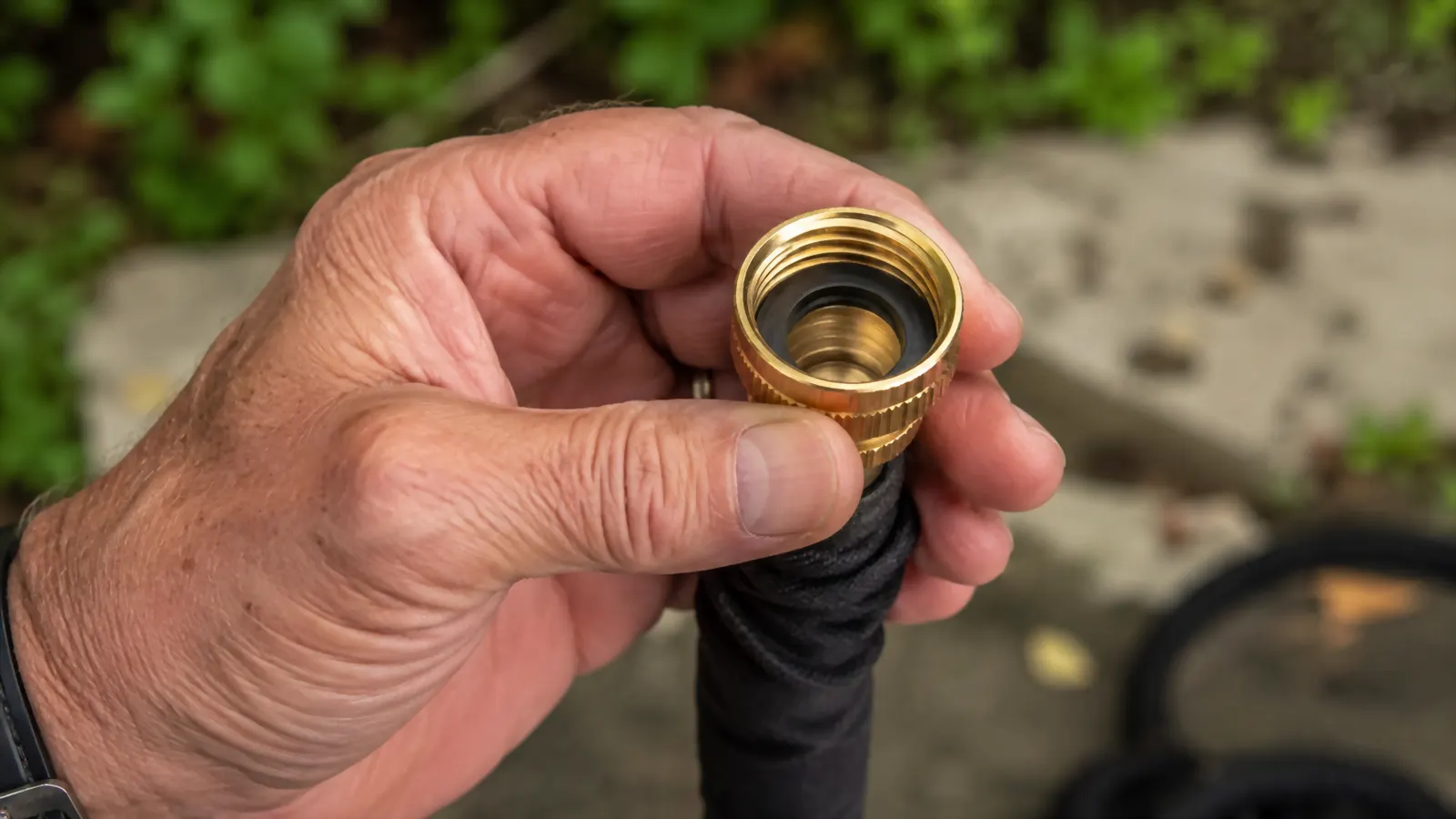
The solid brass fittings are one of the better parts of the Flexi Hose, and I mean that. They thread onto the spigot smoothly and they've never stripped, even with two kids cranking them tighter than necessary. But inside that brass fitting sits a small rubber washer, the same kind of washer you'd find in any hose connection, and it's the one part of the whole setup that nobody mentions when they're praising the fittings.
About three months in, I started noticing a faint drip at the spigot connection, not a leak exactly, more of a slow bead of water forming after the hose had been running a while. I unscrewed the Flexi Hose fitting and found the washer had shifted slightly out of place, worn just enough at one edge to let a trickle through. Pressing it back into position and giving the fitting a slightly firmer hand-tighten solved it for a few weeks, but I've had to check it three or four times since.
This isn't a Flexi Hose problem specifically, it's true of nearly every hose with a rubber washer in the fitting, but the listing photos and the marketing copy focus entirely on the brass, never the small rubber piece doing the actual sealing work inside it. If you buy this hose, keep an eye on that connection every few weeks, especially once the fitting has been screwed and unscrewed a few dozen times over a season. A small pack of spare washers from the hardware store costs next to nothing and saves you a trip back out to the shed mid-watering.
Sun, Snags, and the First Cold Snap
The Flexi Hose has one quirk with sun exposure that genuinely surprised me. If I leave it coiled up in direct midday sun for more than an hour or two, especially near the driveway where there's no shade at all, the fabric outer layer gets warm enough that I notice it through my gloves, and the hose feels noticeably softer and looser than it does first thing in the morning. It doesn't seem to damage it in any one sitting, but I started making a point of coiling it in the shade of the shed wall instead of leaving it out by the boxwoods where the sun hits hardest in the afternoon, just to be careful.
Snag risk is the other thing I'd tell you about honestly. My boxwood row along the drive isn't thorny, but there are enough low, stiff twigs at the base of an established hedge that dragging the Flexi Hose too close to the row has caught the fabric sleeve a couple of times, and once the wheel of my garden cart rolled directly over a section of it while it was lying across the path. Nothing tore, but I felt the difference between running it over grass and running it over gravel or a hard wheel, and I'd steer clear of both when I can.
Cold weather is the last thing worth mentioning, since we do get real frost here in the Piedmont even though our growing season runs March through November. I drain the Flexi Hose and bring it into the shed any night there's a frost warning, rather than leaving it coiled outside with water still in it. An expandable hose left full of water through a hard freeze is asking for trouble at the seams, and it's a five-minute habit that costs nothing to build.
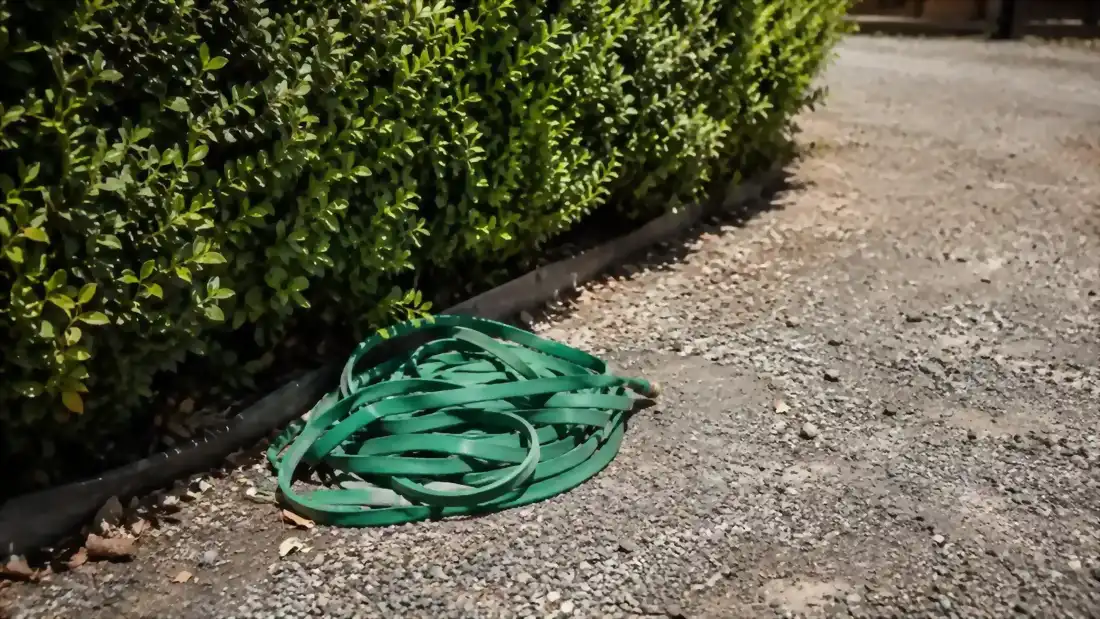
I go into the season-long wear pattern, including how the fabric sleeve holds up month over month, in my separate long-term review of this same hose. And if you're trying to decide between an expandable design like this one and a traditional rubber hose before you commit either way, I compared the two directly in Flexi Hose vs a heavy rubber hose.
What I Liked
- Solid brass fittings thread on smoothly and resist stripping, even under rough grandkid handling
- Collapses instead of kinking on tight turns, keeping water moving where a rigid hose would pinch shut
- Lightweight enough that the pressure drop at full stretch is a fair tradeoff for most raised-bed watering
- Shrinks back down fast for easy one-hand storage the moment you're done
- Genuinely easy to learn the quirks of once you know what to watch for
Where It Falls Short
- Noticeable pressure drop at the far end of the fifty-foot run compared to near the spigot, and sensitive to household demand elsewhere
- Snaps back and drags loose tools or small objects the instant you shut the water off
- The rubber washer inside the brass fitting needs periodic checking, it's not maintenance-free
- Softens and warms noticeably if left coiled in direct midday sun for more than an hour or two
- Vulnerable to snags from hedge twigs, gravel, or a cart wheel rolling over it while it's laid out
None of these quirks are dealbreakers on their own. But five small surprises in your first month with a hose add up to a very different experience than the one the product photos promise, and I'd rather you know all five before you buy than find them one at a time.
Who This Is For
If you're watering raised beds or a smaller yard, willing to build a couple of easy habits like shutting the water off at the spigot and coiling the hose in the shade, the Flexi Hose is a genuinely pleasant hose to use day to day. Anyone dealing with shoulder or back trouble who wants something light to carry will appreciate it just as much once they know what to expect from the pressure and the snap-back, and anyone willing to check a rubber washer once in a while won't find the maintenance to be much trouble at all.
Who Should Skip It
If your spigot sits in full sun all day with no shady spot nearby to coil it, or your yard has gravel paths, thorny hedges, or regular cart and wheelbarrow traffic crossing wherever the hose has to lie, I'd think twice. A heavier rubber hose shrugs off that kind of abuse without a second thought, and it won't yank your kneeler over the moment you shut the water off. Know your yard before you know which hose fits it.
Now You Know What the Listing Photos Leave Out
The Flexi Hose earns its keep once you know its quirks going in. See today's price and the current rating on Amazon and decide if it fits your yard, not just the marketing photos.
Amazon Check Today's Price on Amazon →