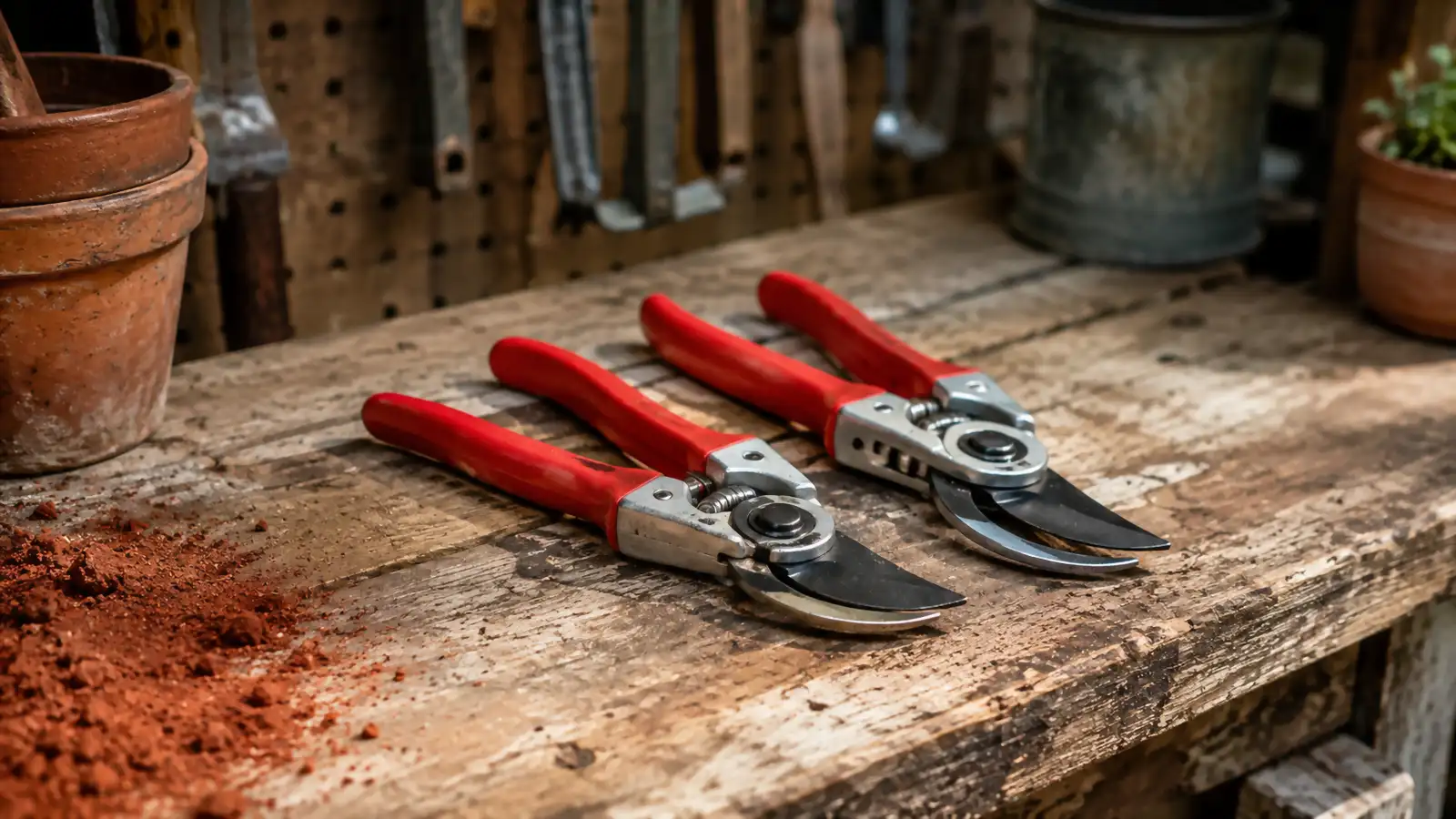
I have owned more pairs of pruning shears than I can count, but I have only bought two brands twice. Felco is one of them. My current Felco F2 has been on the hook by the shed door for going on five seasons now, and before that I ran a Fiskars pair for about six seasons until the pivot bolt loosened up and never sat right again. Both tools will cut a branch clean the day you bring them home. The question that actually matters, after thirty-eight years of pruning boxwoods and roses and one stubborn willow oak sucker every spring, is what happens in year four.
So this is a straight comparison between the Felco F2 and a Fiskars bypass pair, the kind you will find in the same aisle at most garden centers. Not a brand-war piece. Just what I noticed with my own hands, on my own half-acre outside Burlington, cutting the same red clay soil dulls a blade faster than most people expect.
| What Matters | Felco F2 | Fiskars Bypass |
|---|---|---|
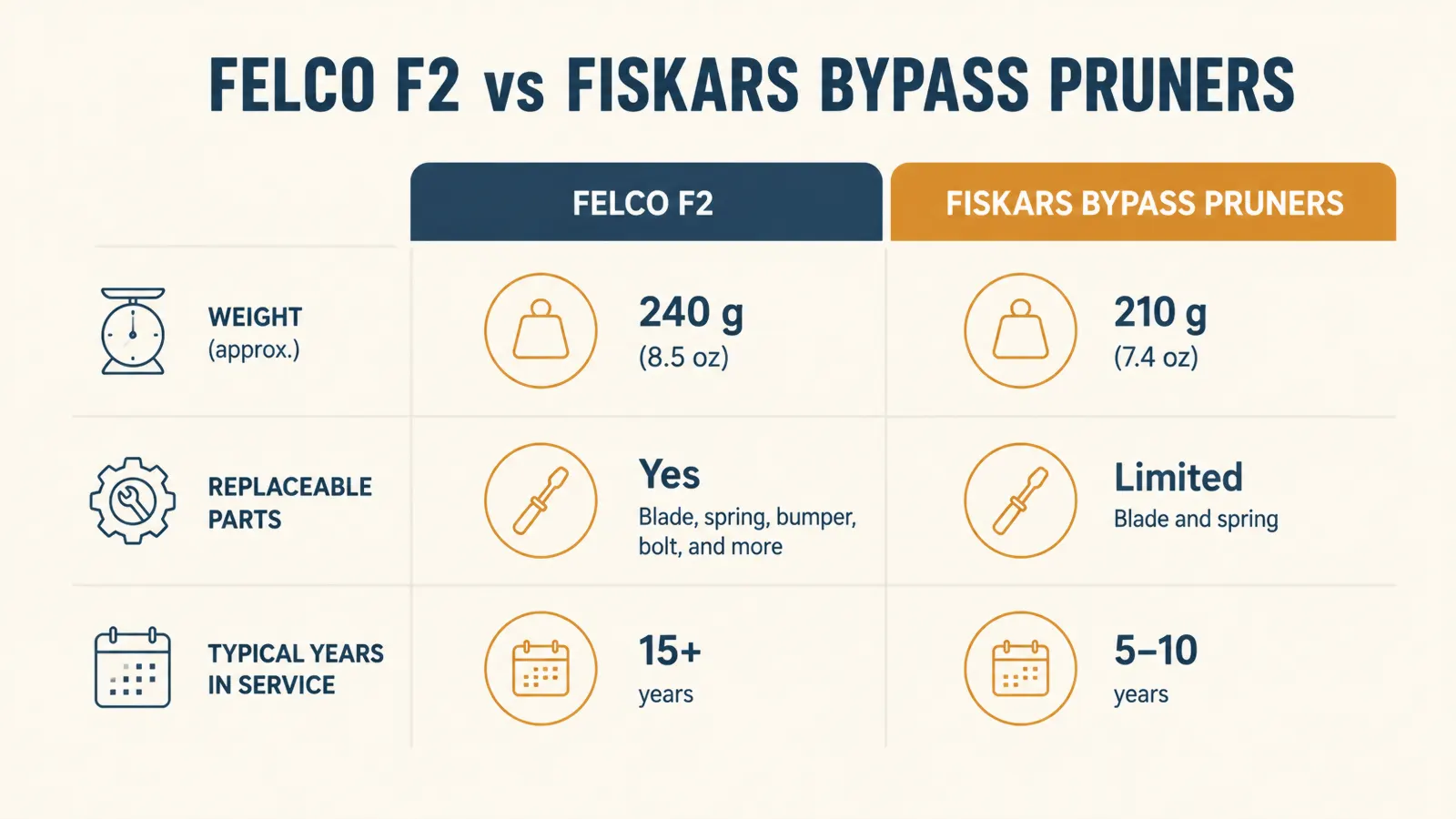
| Replaceable blade | Yes, every part sold separately and swappable at home | No, the blade is riveted to the handle on most models |
| Weight in hand | 8.8 oz, forged steel handles | 6.1 oz, lighter aluminum handles |
| Grip adjustability | Handle spread adjusts with a small screw for hand size | Fixed handle spread, one size fits most |
| Blade steel | High carbon steel, holds an edge through a full season | Coated steel, sharp out of the box but dulls sooner |
| Sap groove | Cuts through sap buildup on the blade as you squeeze | No sap groove on most standard bypass models |
| Cutting capacity | Up to about 1 inch on green wood | Up to about 5/8 inch, best on smaller stems |
| First-cut sharpness | Sharp, but not razor-fresh out of the wrapper | Very sharp right out of the package |
| Repair parts availability | Full parts diagrams and individual parts sold online | Limited, mostly whole-tool replacement |
| Comfort for small hands | Adjustable spread helps, but the handle is still substantial | Lighter and slimmer, easier for a smaller grip |
Where the Felco F2 Wins
The thing that sold me on Felco the first time was not the cut quality, it was finding out you could take the whole tool apart. Every spring I pull my F2 off the pegboard, back out the two screws, and clean out a winter's worth of sap and grit. The spring, the blade, the anvil, the return spring, all of it is a stocked part on Felco's own site. When the blade finally lost its edge a few years back, I did not buy a new pair of shears. I bought a replacement blade, swapped it in on the workbench in about ten minutes, and kept using the same handles I had already broken in.
That matters more than it sounds like it should. A Fiskars bypass pair, at least the standard models I have owned, is built as one riveted unit. When the blade goes, the whole tool goes with it. I am not saying that to knock Fiskars, they make a fine first pair of shears, but it is a real difference in what you are actually buying. With Felco you are buying a system you maintain. With Fiskars you are buying a tool you replace.
The high carbon steel blade on the Felco F2 holds an edge through a genuinely long season. I prune from March, once the frost risk passes here in the Piedmont, all the way through November when I cut back the last of the perennials before winter. A Fiskars blade I owned needed a touch-up on the whetstone by midsummer most years. The Felco gets one good sharpening in March and one more somewhere around August, and that is usually enough to see it through.
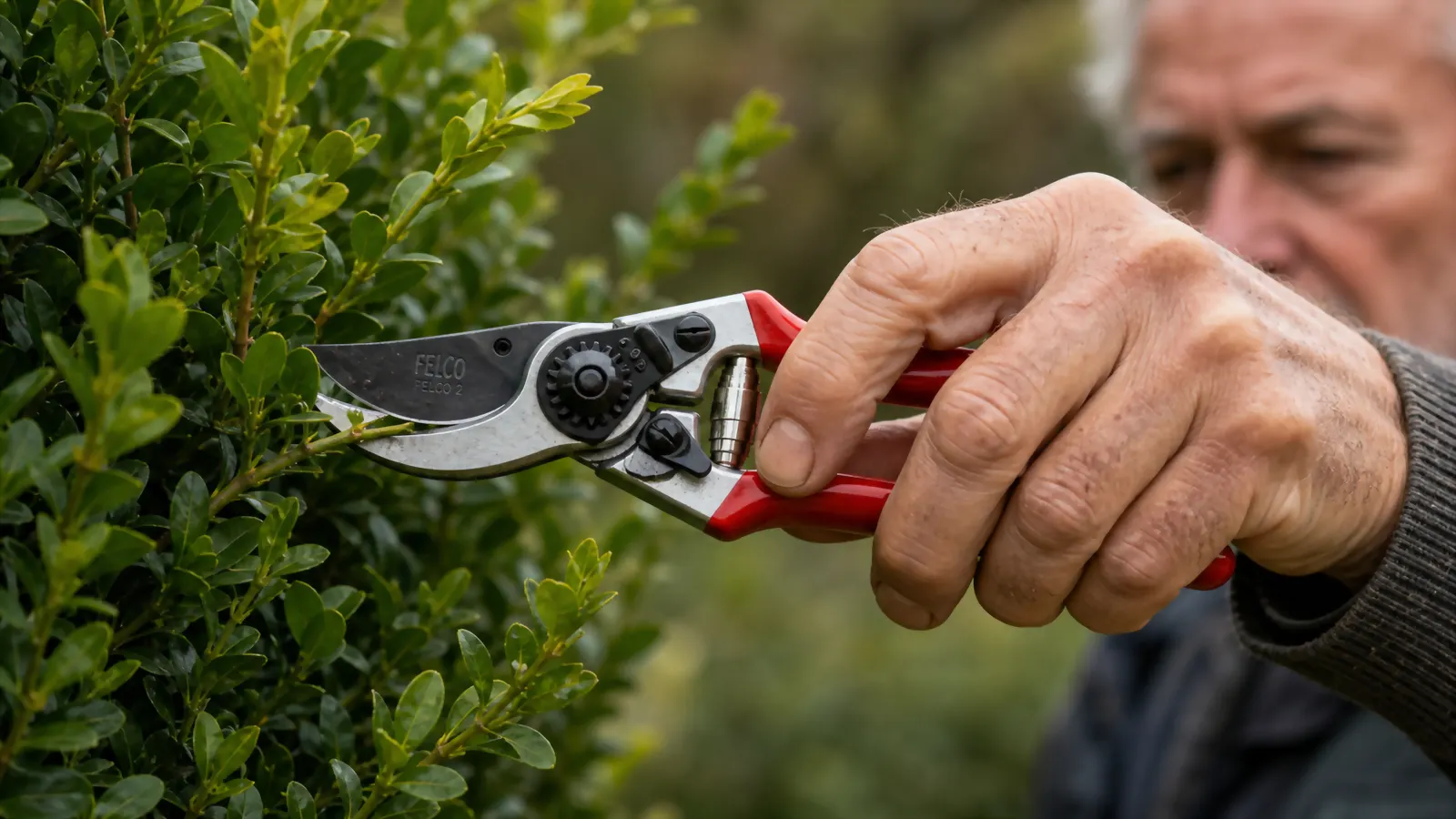
The sap groove is a small feature that saves a real amount of frustration. Anyone who has pruned a fig branch or a rose cane in humid weather knows the blade gums up fast, and a gummed blade starts crushing stems instead of cutting them clean. The groove on the F2 wipes most of that sap off with the motion of the cut itself. My old Fiskars pair did not have one, and by midday in July I would be stopping every dozen cuts to wipe the blade down with a rag.
A pruning shear you fix instead of replace.
The Felco F2 has held an edge through five of my seasons here in Burlington, and every part on it is replaceable when the time comes. Rated 4.8 stars by more than 14,000 Amazon customers.
Amazon Check Today's Price on Amazon →Where the Fiskars Bypass Wins
I will not pretend the Felco wins every category, because it does not. The Fiskars pair I owned was noticeably lighter, and if you are out for an hour deadheading roses or cutting back a big stand of perennials, that lighter weight shows up in your forearm by the end of it. My wife Delia has smaller hands than mine, and when she helps me trim the boxwoods along the drive, she reaches for a lighter pair more often than not. The forged steel handles on the Felco add real heft, and heft is a tradeoff, not a flaw, but it is one worth naming honestly.
Fiskars also ships sharper on day one. Straight out of the package, a new Fiskars bypass pair will glide through a green stem with almost no resistance. The Felco is sharp enough to work with, but it is not the same razor edge fresh out of the wrapper. That first-cut feel matters if you are the kind of gardener who wants a tool to perform immediately and does not plan to do any maintenance on it yourself. For someone who wants to open the package and start cutting without thinking about sharpening schedules, that first impression counts for something.
The narrower, more contoured handle on the Fiskars also fits a smaller hand a little more naturally right away, without needing to adjust anything. The Felco's grip-spread screw closes that gap some, but it takes a minute to find the right setting, and most people never bother adjusting it after the first try.
The Fiskars is a good pair of shears for a season or two. The Felco is a pair of shears you plan to still own when your grandkids are old enough to help you use it.
What Actually Fails First
The honest answer, from watching both tools wear out on my own bench, is the pivot. Every bypass pruner lives or dies at that single bolt where the two blades cross. On the Fiskars I owned, that bolt loosened within about four seasons of regular use, and once it started working loose there was no adjusting it back to snug. The blades began to wobble sideways under load, which meant they stopped meeting cleanly and started to pinch the wood instead of shearing through it. That is usually the moment a pair of shears gets retired to the truck for rough work instead of the good garden.
The Felco's pivot bolt is a serviceable part with a lock nut you can snug back down with the same small wrench that comes with the tool. Mine has needed that adjustment maybe three times in five seasons, always after a stretch of heavy pruning on the boxwoods. Five minutes at the workbench and it is tight again. That single design choice, a pivot you can service versus a pivot you cannot, is close to the whole story of why one of these tools outlasts the other by a wide margin in my experience.
Rust is the other place I have seen a real difference. My grandson Sawyer left a pair of shears out by the raised beds overnight after a spring rain more than once, and the Felco's forged steel handles shrugged it off with a wipe-down. A coated blade, if the coating gets nicked anywhere, tends to start rusting right at that nick, and once rust starts on a cutting edge it does not stop on its own. I am not careless with my tools, but grandkids helping in the garden means tools do not always make it back to the shed the same day they come out.
How I Put Both Through the Same Season
Before I trust any tool with the boxwoods along the drive, I run it through one full season of comparable work. A few years back I bought a second Fiskars pair specifically so I could put it through the same cuts as my Felco F2, on the same afternoons, on the same plants. Anecdotes from one tool used once do not tell you much. What tells you something is running both shears through the same rose canes, the same boxwood hedge, and the same overgrown willow oak sucker that comes back every spring no matter how many times I cut it down.
By June of that season, the difference was already showing. The Fiskars needed a pass on the whetstone after about six weeks of regular use, while the Felco was still cutting clean. By August, the Fiskars pivot had started to develop the faintest wobble, the kind you only notice because you are comparing it to a second tool in the same hand that same afternoon. Neither pair had failed outright. But one was asking for maintenance it could not really give back, and the other was asking for maintenance that actually fixed the problem.
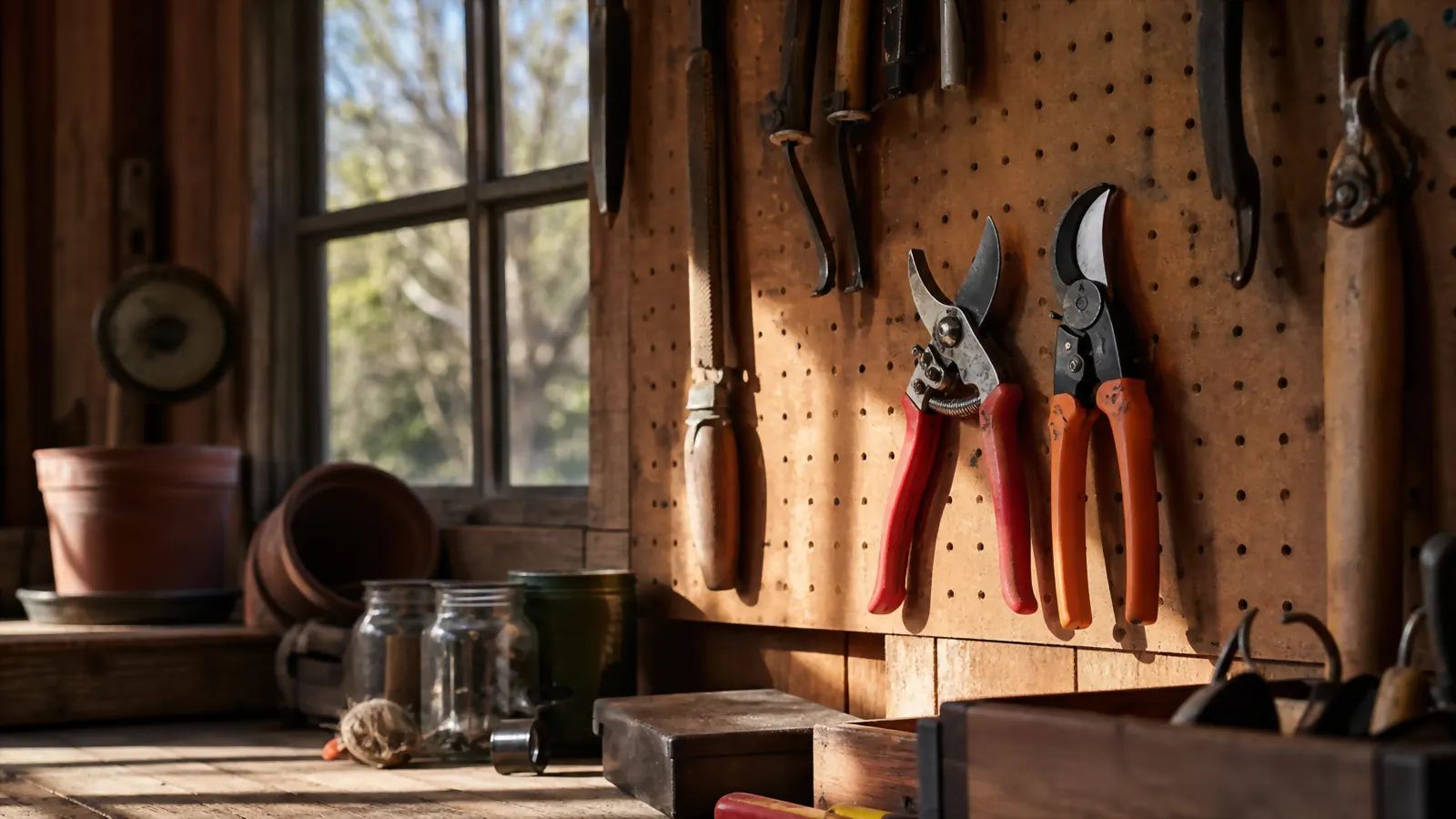
That test is why the pegboard in my shed has more than one hook for pruning shears. I keep a lighter pair, closer to the Fiskars weight class, for quick jobs like deadheading or trimming a few stems near the raised beds. The Felco F2 stays reserved for the real work, the boxwood hedge, the rose canes, anything with real wood behind the bark. Having both taught me the comparison is not really about which tool is better in the abstract. It is about which one you reach for depending on the job, and which one you can count on when the job gets serious.
Who Should Buy the Felco F2
If you garden the way I do, meaning you are out there most weeks from March through November and you expect a tool to earn its spot on the pegboard for years rather than seasons, the Felco F2 is the one to buy. It rewards a little bit of upkeep with a lot of years of service. If you want to sharpen it once or twice a season, wipe it down, and hang it back up, it will still be cutting clean when the boxwoods you planted this year need their fifth trim. Anyone who has read an honest review of what the Felco F2 gets right and wrong knows the maintenance is minor compared to what you get back in blade life.
It is also the better choice if you have any interest in fixing your own tools rather than replacing them. The parts availability alone changes the math. A blade replacement is a small task next to buying a whole new pair of shears, and the handles you have already broken in stay in your hand. For a deeper look at how that plays out over real years of use, I wrote up what five seasons of daily use with the F2 actually looks like.
Who Should Consider the Fiskars Instead
If you prune lightly, maybe a few rose bushes and some seasonal deadheading, and you are not looking to own one pair of shears for a decade, a Fiskars bypass pair is a reasonable choice. It is lighter, it is sharp from the first cut, and for casual use it will likely outlast your patience for gardening before it outlasts its own pivot bolt. Someone shopping for a lightweight pair to keep by the back door for quick trims, without any plan to maintain or repair it, will not go far wrong with Fiskars for that narrower job.
Where it falls short is exactly where the Felco holds up: heavy, repeated use over years, on woodier stems, in a climate like ours where humidity and red clay dust both work against a blade. If that describes your garden, the lighter feel of the Fiskars on day one will likely mean buying a replacement pair more than once over the same stretch of years that a single Felco F2 gets you through.
The pair I still reach for after five seasons.
The Felco F2 is rated 4.8 stars across more than 14,000 Amazon reviews, and every part on it, blade included, is replaceable when the time comes. If you prune more than a handful of times a season, this is the one worth owning once.
Amazon Check Today's Price on Amazon →