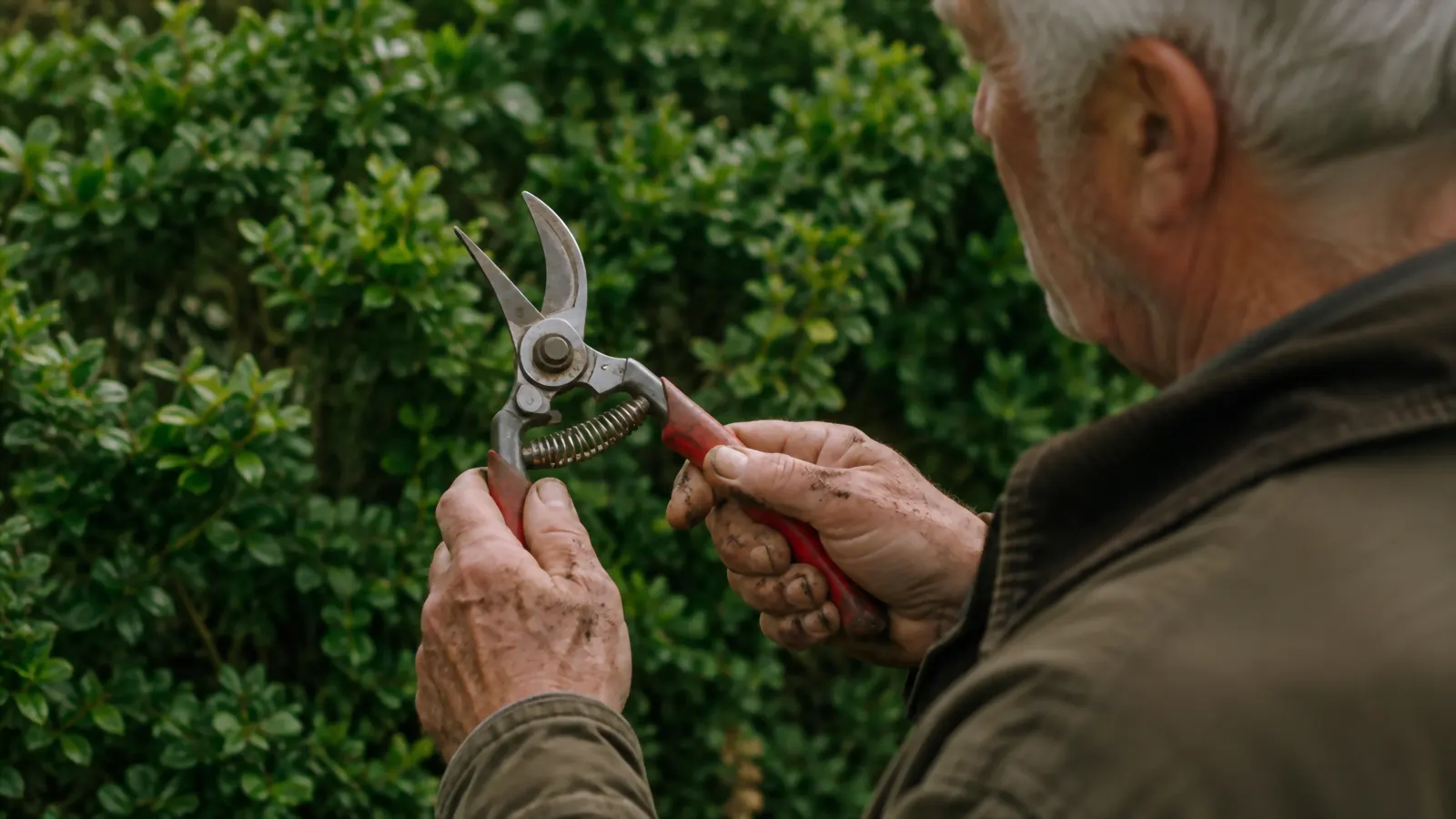
I want to start with the thing nobody puts in a five-star review. The handle-spread notch on my first Felco F2 chewed a blister into the base of my thumb for close to two weeks before I figured out I'd had it set wrong the whole time. That's the kind of detail you don't get from a listing photo, and it's why I'm writing this one the honest way instead of the polished way. I'm Emmett Braddock, 71, and I've been gardening this same half-acre outside Burlington, North Carolina for 38 years. I bought my first Felco F2 back when kneeling in the beds didn't cost me anything the next morning, and I've since bought a second pair, not because the first one failed on me, but because I wanted the chance to tell you plainly what changes with time and what doesn't.
So this isn't the glowing writeup. I already wrote the long-term review after five seasons if you want the full arc. This one is the parts people leave out. There are two real drawbacks to the Felco F2 that nobody warned me about, a couple of smaller annoyances that add up, and a handful of things it does better than I expected. I'll give you all of it, including the parts that don't flatter the brand.
The Quick Verdict
Excellent bypass shear for a grown adult's hand, but the replacement parts, the sap buildup, and the missing holster on some listings are real costs nobody mentions upfront.
Amazon Check Today's Price →Still the shear I reach for first, blister and all.
If your hedge trimming looks like mine did five years ago, red clay under the nails and a pair of dollar-store shears that won't bite through anything thicker than a pencil, this is the upgrade that actually holds an edge.
Amazon Check Today's Price on Amazon →How I've Used It
My yard hasn't changed much in 38 years. There's a row of boxwoods along the drive that I trim twice a season, two raised beds I built back in 2019, and one big willow oak that drops more than its share of deadwood after a storm. The Felco F2 has cut through all of it, though not always cleanly, and I'll get to that. My grandkids, Sawyer, who's 9, and June, who's 6, like to help in the raised beds, and more than once Sawyer's dropped my shears in the mud trying to clip a tomato sucker himself. Red clay does not rinse off a pivot bolt easily, and that's relevant later.
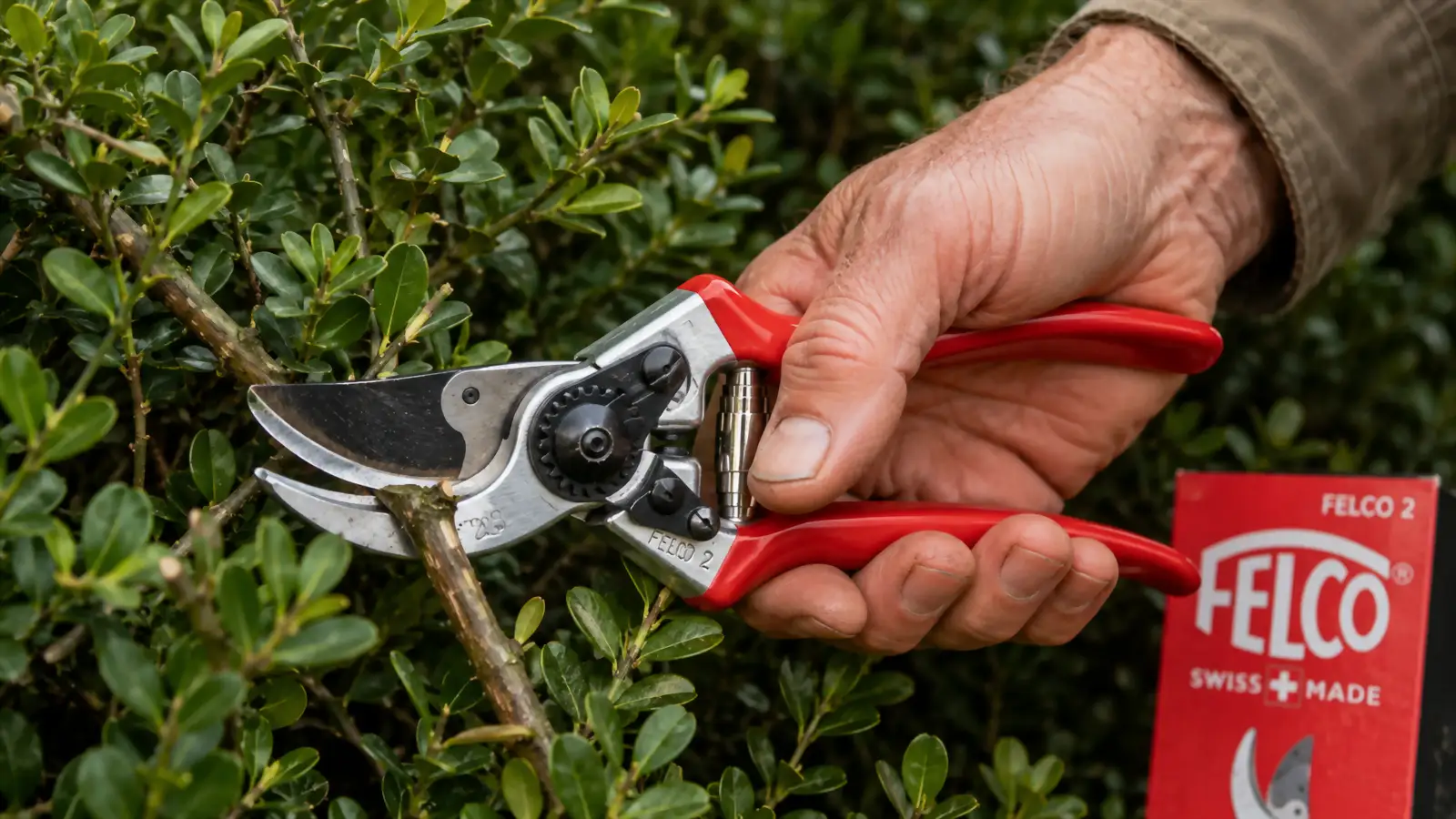
I use the Felco F2 from March through November most years, which around here means everything from soft new rose growth in spring to woody boxwood stems by midsummer to genuinely thick deadwood off the oak in fall. It's a bypass design, which means the two blades slide past each other like scissors rather than crushing against an anvil, and that matters for how clean the cut heals on a live branch. I noticed the difference right away on the roses, less bruising at the cut than what I'd gotten from my old anvil-style clippers.
I've also learned it isn't a tool you can leave lying in the wheelbarrow overnight without paying for it later. Dew settles on the pivot bolt, red clay grit works its way into the joint if the shears sit on the ground, and by the next morning the action feels gritty until I've cleaned and oiled it. That's ten minutes I didn't think I'd need to budget when I first bought the Felco F2, and I've come to just treat it as part of owning the tool rather than a flaw in it.
But I also noticed, within the first month, that the Felco F2 gums up with sap faster than I expected for something billed as a premium tool. On the boxwoods especially, the blade starts to drag by the third or fourth cut if I haven't wiped it down. Nobody mentioned that in the reviews I read before buying.
The Blade Nobody Explains Properly
The Felco F2 uses a hardened steel blade that's genuinely sharper out of the box than anything I'd owned before it. That part of the reputation is deserved. What doesn't get explained well is maintenance. Sap builds up on the curved cutting blade faster in humid weather, which is most of a Piedmont summer, and if you let it sit, it hardens into something closer to varnish than sap. I've had to soak the blade in a rag with a little solvent more than once just to get back to a clean edge.
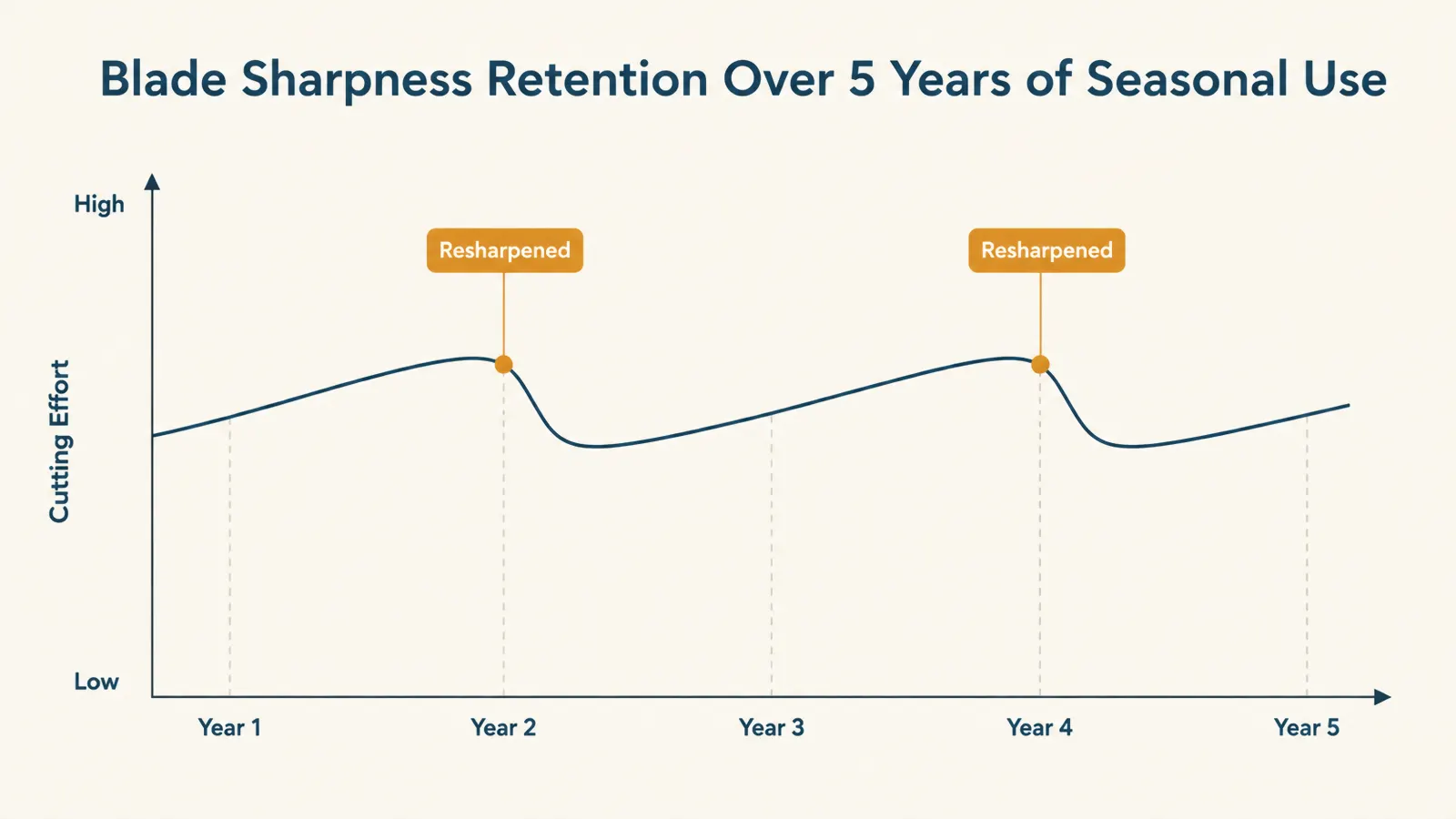
The other thing is resharpening. Felco sells a small sharpening tool for the F2's blade, and I'll admit I put off buying one for almost two years, running the shears dull instead. Once I finally used it, the difference was night and day, but that's an added cost and an added task that nobody frames clearly when they're telling you how sharp this thing is on day one. Sharp on day one is easy. Sharp on day three hundred takes upkeep.
The blade also isn't cheap to replace outright. Mine has never needed a full blade swap, but I looked into it after a neighbor's did, and it's not a small purchase. If you're the type who leaves tools out in the rain, factor that into what you're really paying for a Felco F2 over its lifetime, not just what shows up at checkout.
One more thing worth saying plainly. The Felco F2's edge is a single bevel, ground on one side of the blade rather than both, and that's part of why it holds up so well against woody stems. It's also why resharpening it yourself takes a little practice if you've only ever sharpened a standard double-bevel knife. I ruined the angle on my first attempt and had to correct it with a finer stone. Worth knowing before you assume it's a five-minute job.
What Changes After Two Years, Not Two Weeks
Everybody reviews a tool in the first month. Almost nobody comes back at year two or year three to tell you what actually gave out. On my first Felco F2, the return spring, the little coil that pops the handles back open after every cut, started feeling weaker around the two and a half year mark. It still worked, but the shears no longer sprang open on their own the way they had when new. I had to manually open them more than I used to, which sounds minor until you've made four hundred cuts in an afternoon and your hand is doing extra work each time.
The revolving handle, which is supposed to reduce hand fatigue by letting the lower handle rotate slightly as you squeeze, is a real feature and it does help. But it also loosens over time. By year three I noticed a bit of play in that handle that wasn't there when the Felco F2 was new. It's adjustable with the same small screwdriver Felco includes, so it's not a defect exactly, more a maintenance item that catches people off guard because nothing in the marketing tells you to expect it.
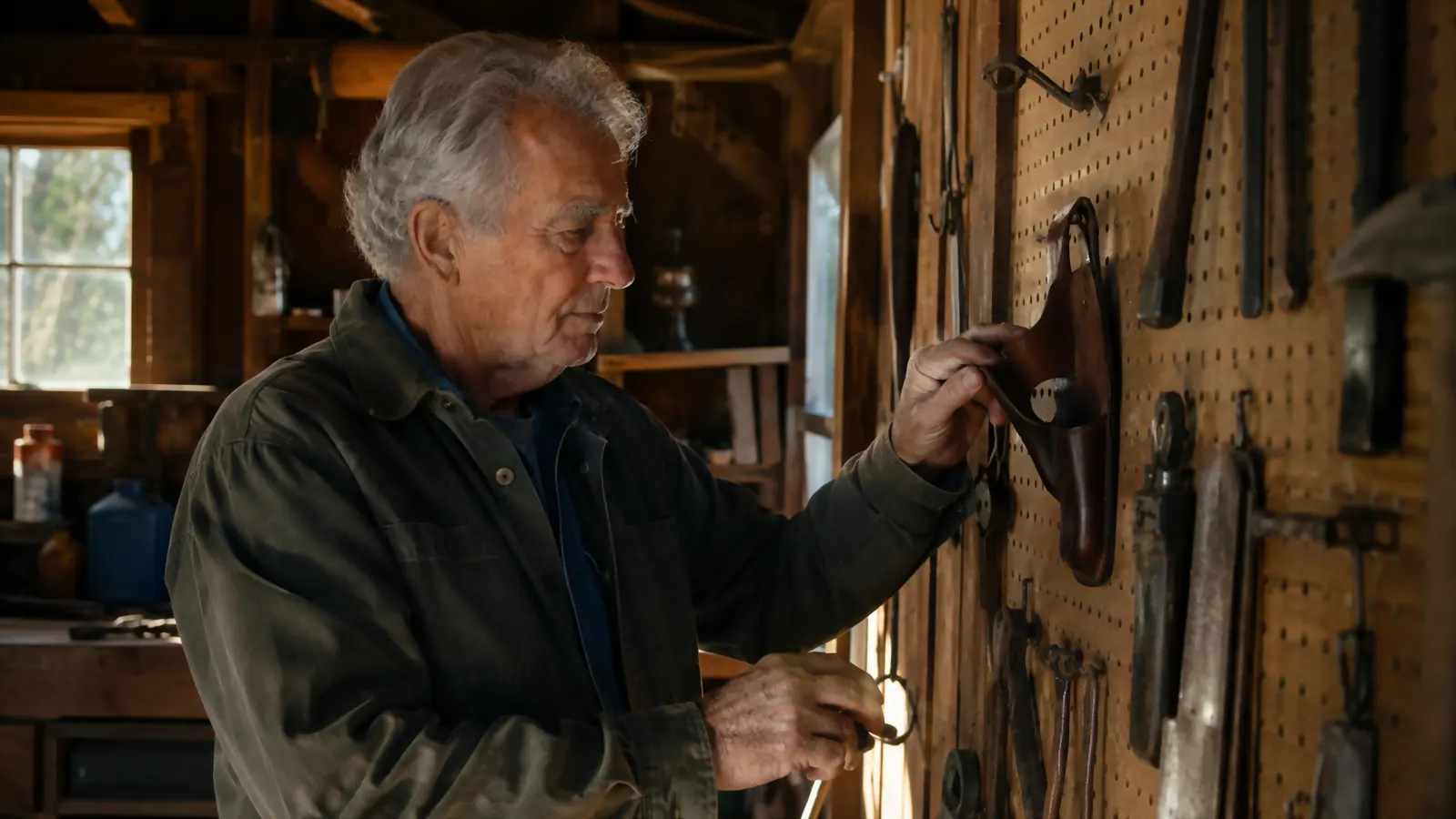
None of this made me stop using the tool. I bought a second Felco F2 two seasons ago mostly so I'd have a backup while the first one sat waiting on a spring replacement, and I still reach for the older one out of habit more often than not. The two now sit side by side on the pegboard in my shed, and you can tell them apart at a glance, the older one's handle has gone a duller red from five seasons of sun.
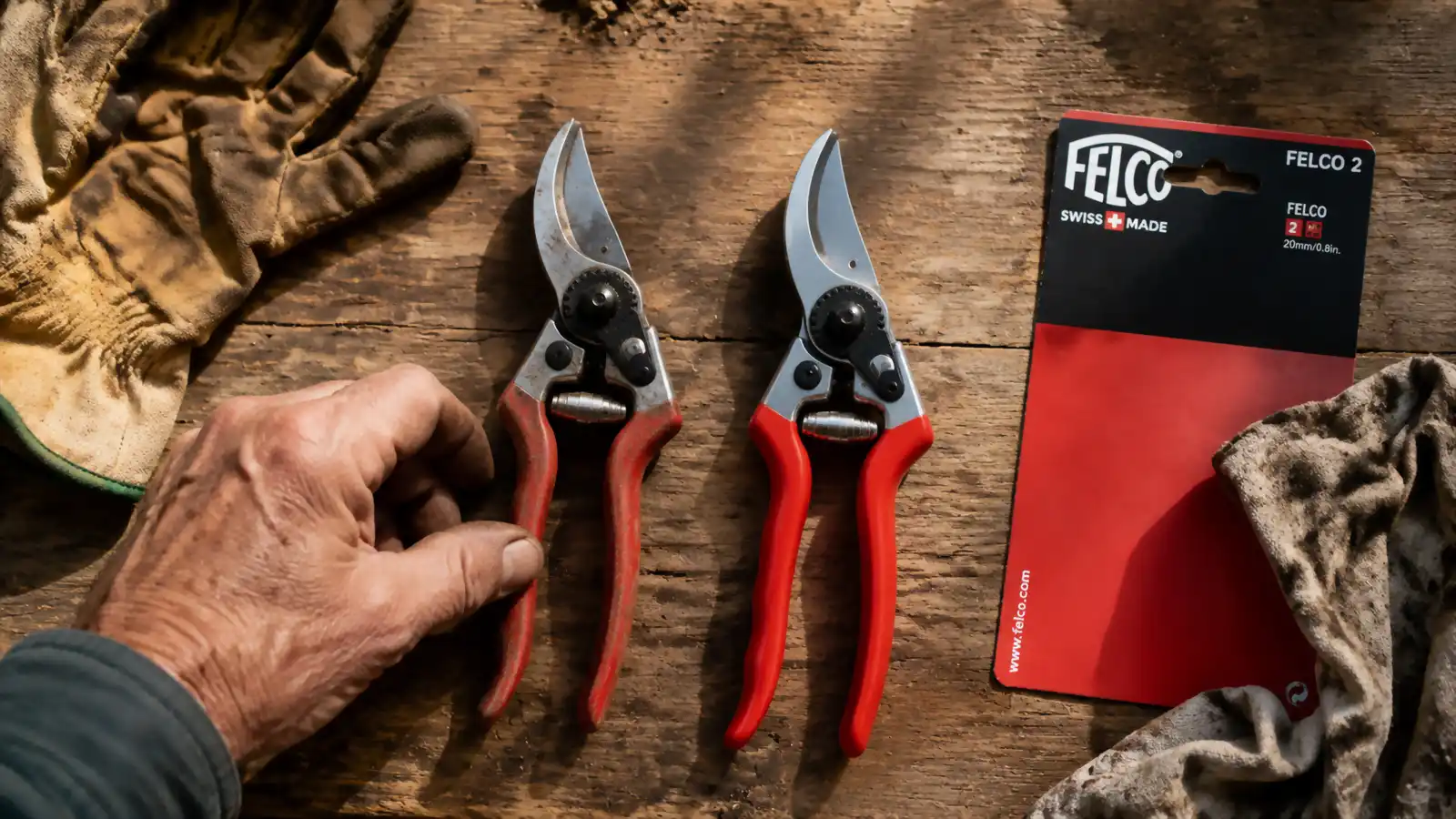
Five seasons in, I can tell you the parts that wear are the small moving ones, not the blade itself. The blade on that first pair is still the original steel, still holding a working edge with periodic sharpening. It's the spring and the handle pivot that showed their age first, and that's worth knowing before you assume the whole tool wears evenly.
Who Actually Needs the Full-Size Grip
This is the section I wish someone had written before I bought a second pair for Delia to use in her own corner of the garden. The Felco F2 is built for a full adult hand, and the handle spread, even adjusted down at the smallest notch, is still wide for someone with smaller hands. Delia used mine exactly twice before she went back to her old lightweight clippers, and when I looked into it afterward, Felco actually makes a smaller-grip model in the same F series meant for exactly her situation. Nobody selling the F2 tells you that upfront.
If you've got an average to large hand, the Felco F2 fits well once you dial in that handle-spread notch, which is the adjustment that gave me the blister in the first place. Get that notch wrong and you'll grip too hard trying to compensate, and that's on you to catch, because the shears themselves won't tell you.
I'd also say this to anyone with any grip strength concerns at all, not just small hands. The Felco F2 needs a real squeeze to get through anything thicker than a pencil, and after a couple hours in the beds my hand feels it, even at 71 with hands that have done this work for decades. It's not a tool that hides effort from you the way some of the ratcheting shears do.
The Tradeoffs Nobody Mentions
Here are the two drawbacks I think matter most. First, depending on which listing you buy from, the holster is not always included with the Felco F2. Mine came without one the first time, and I spent a full season keeping the shears loose in a coat pocket or set down on a stump, which is exactly how you lose a good tool in tall grass. I bought the holster separately after that, and it hangs on the pegboard in my shed now, but check the listing carefully before you assume it's bundled.
Second, the ongoing upkeep is real. Between the sap cleaning, the periodic sharpening, and the spring that eventually needed replacing on my first pair, the Felco F2 is not a buy-it-and-forget-it tool the way a cheap pair of shears is. You're trading that convenience for a blade that stays sharper longer and a cut that heals cleaner on live wood. Whether that trade is worth it depends on how much pruning you actually do.
There's also the price. The Felco F2 costs meaningfully more than the shears sitting next to it at the hardware store, and I won't pretend otherwise. What I will say is that I've bought exactly two pairs of pruning shears in five seasons of heavy use, both Felco, and before that I was replacing cheap ones almost every year.
None of this is a dealbreaker for me, but I'd rather you go in knowing the whole picture than find out about the holster or the sap buildup the hard way, the way I did. A tool this capable deserves an honest accounting, not just a highlight reel.
Alternatives I Considered
Before I bought my first Felco F2, I seriously looked at Fiskars, mostly because they're what the big box store had in stock and I didn't want to wait on a special order. I ended up writing a fuller side-by-side in how the F2 compares to Fiskars if you want the details, but the short version is that Fiskars felt lighter in the hand and cost less upfront, while the Felco held its edge noticeably longer in my own testing on the same boxwood row.
I also tried a cheaper no-name bypass shear for one season out of curiosity, mostly to see if the Felco F2 name was doing the heavy lifting. It wasn't. The no-name pair dulled within weeks on the same boxwoods and never got the roses cut clean. That's the one comparison where the Felco earned its keep without any argument from me.
What I Liked
- Blade stays sharp far longer than cheaper bypass shears in my direct testing
- Bypass design leaves a cleaner cut on live rose and shrub growth
- Replaceable parts mean the tool can outlast a lot of cheaper shears entirely
- Handle-spread notch lets you fit the grip to your hand once you understand it
Where It Falls Short
- Sap builds up on the blade faster than expected and needs regular wiping
- Return spring and revolving handle both showed wear by year two and a half
- Holster is not guaranteed to be included depending on the listing
- Handle is sized for an average to large adult hand, not a good fit for smaller hands
The blade earned its reputation. The moving parts are the part nobody warns you about.
Who This Is For
If you're pruning shrubs, roses, or light deadwood regularly, several times a season and not just once a year, the Felco F2 is worth the extra cost. You'll use it enough that the sharper, longer-lasting blade pays you back in time saved and cleaner cuts on live plants. It's also a good fit if you've got an average or larger hand and don't mind a maintenance routine, wiping sap off the blade and eventually sharpening it or replacing a spring.
Who Should Skip It
If you've got smaller hands, look at Felco's smaller-grip model instead of forcing the F2 to fit, the way Delia had to figure out the hard way. And if you only prune once or twice a year, a cheaper pair of bypass shears will do the job without asking you to keep up with sharpening and part replacement on a tool that's mostly sitting in a drawer the rest of the time.
Sharp on day one is easy. This one's still sharp at year five.
Between the two pairs I've owned, the Felco F2 has outlasted every cheap shear I ever bought, upkeep and all. If your hedge is due for a trim, this is the one I'd still put on my belt.
Amazon Check Today's Price on Amazon →