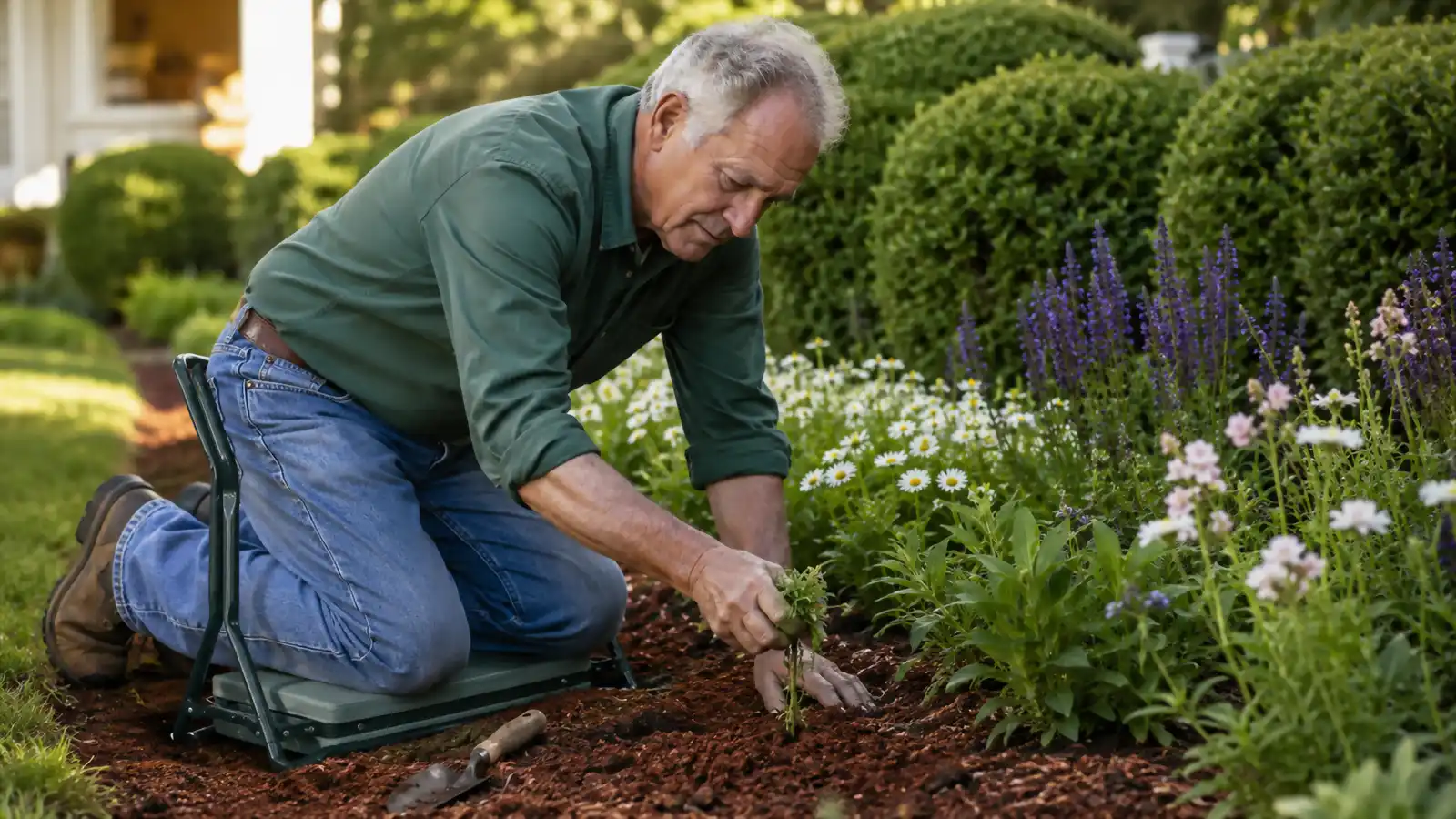
I've been down on my knees pulling weeds out of red clay for going on thirty-eight years now, and the getting down was never the problem. It's the getting back up that turns a twenty-minute chore into a production, especially once you're seventy-one and the ground doesn't feel like it used to. I finally worked out a system that lets me weed both raised beds and the whole boxwood row along the drive without my knees complaining by the second bed, and a good part of that system is the KVR garden kneeler and seat I keep leaning against the pegboard in my shed. This isn't a review of the thing, I've already written that one. This is the actual method I use, start to finish, on a Saturday morning when the flower beds have gotten away from me.
None of what follows is complicated, and none of it needs anything fancier than what's already sitting in most sheds. The whole point is timing the work right, breaking it into pieces small enough to actually finish, and using the KVR kneeler and seat the way it's built to be used instead of just kneeling on it like a fancy pillow. Delia still teases me that I used to come inside after weeding looking like I'd wrestled somebody, and I don't do that anymore. Here's exactly how I go about it now.
Before You Get Down on the Ground, Get the Right Thing Under Your Knees
Weeding red clay on bare knees or a flat scrap of foam is how a twenty-minute job turns into an afternoon you regret. The KVR kneeler and seat gives you a thick pad to kneel on and a seat to flip to when you need one. Check today's price and see the current rating for yourself.
Amazon Check Today's Price on Amazon →Step 1: Wait for the Ground to Let Go, Weed After a Rain
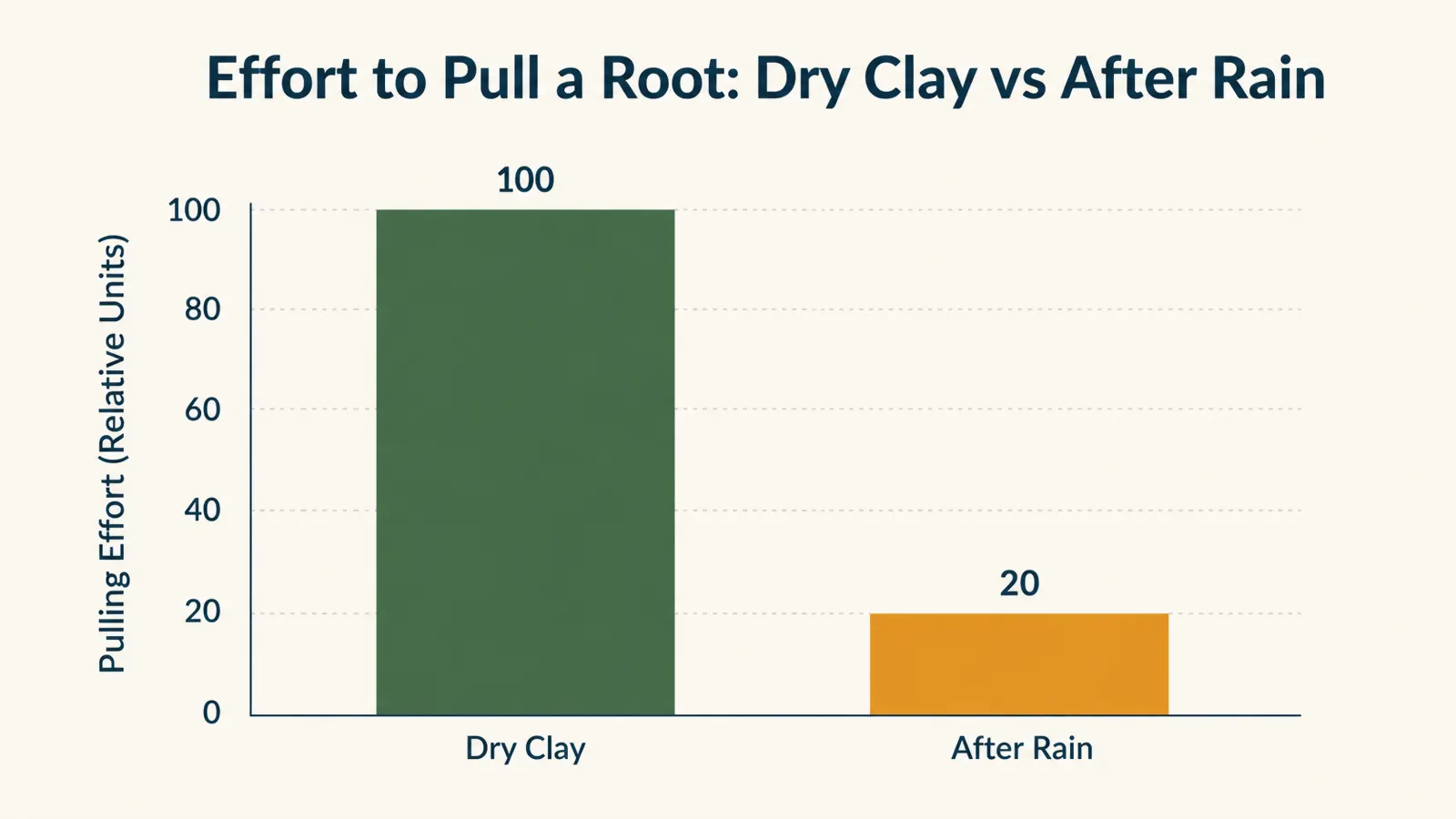
The single biggest difference in how hard a weeding session is on me has nothing to do with tools, it's timing. Piedmont clay bakes hard as brick by midsummer, and pulling a dandelion out of dry clay means fighting the root the whole way, which means more time on my knees and more strain in my hands and shoulders than the job needs. Wait a day or two after a good rain and that same root slides out clean, root and all, with barely a tug. I've learned to check the weather and plan my weeding Saturdays around whatever rain came through Wednesday or Thursday, not around whatever day happens to be open on my calendar.
This matters more the older I get, because the difference between a weed that yields easy and one that fights back isn't just annoying, it's the difference between fifteen minutes on the KVR kneeler and forty-five. If it hasn't rained in a stretch, I'll run the hose over a section the evening before instead of waiting on the sky to cooperate. Either way, soft ground is the first thing I check before I ever haul the kneeler out of the shed, because no tool makes dry, cracked clay easy to work.
I also check the soil with my hand before I ever kneel down, not just the calendar. If a handful of clay from the bed crumbles apart rather than balling up, it's still too dry and I'll wait another day. If it packs into a ball that holds its shape but doesn't stick to my palm, that's about right. Too wet and I'm tracking mud back into the house every time I stand up, which Delia has opinions about.
Step 2: Work One Small Section at a Time
I used to look at the whole flower bed at once, decide it needed weeding, and get down on the ground with the idea I'd finish the whole thing in one go. That's a mistake for anybody, but especially for a man my age. Now I break each bed into sections about the size of a card table, work that section completely, and only then decide whether I'm moving the kneeler over or calling it good for the day. It sounds like a small thing, but deciding ahead of time what counts as finished keeps me from staying down past the point where I should have stood up ten minutes earlier.
Small sections also mean I'm not dragging the KVR kneeler across half the yard between weeds. I move it maybe four or five times over the course of a bed instead of shuffling on my knees to reach the next patch, which is exactly the kind of shuffling that used to leave me sore by the end of an afternoon. The kneeler's light enough to pick up and set down again without much thought, so moving it isn't the chore that staying in one spot too long is.
I also work in the same direction every time, left to right along a bed the way I'd read a page, instead of jumping around to whatever weed catches my eye first. It keeps me from doubling back over ground I already cleared, and it means I always know exactly where I left off if June or Sawyer pulls me away to look at something in the yard.
Step 3: Get the Whole Root, Not Just the Top
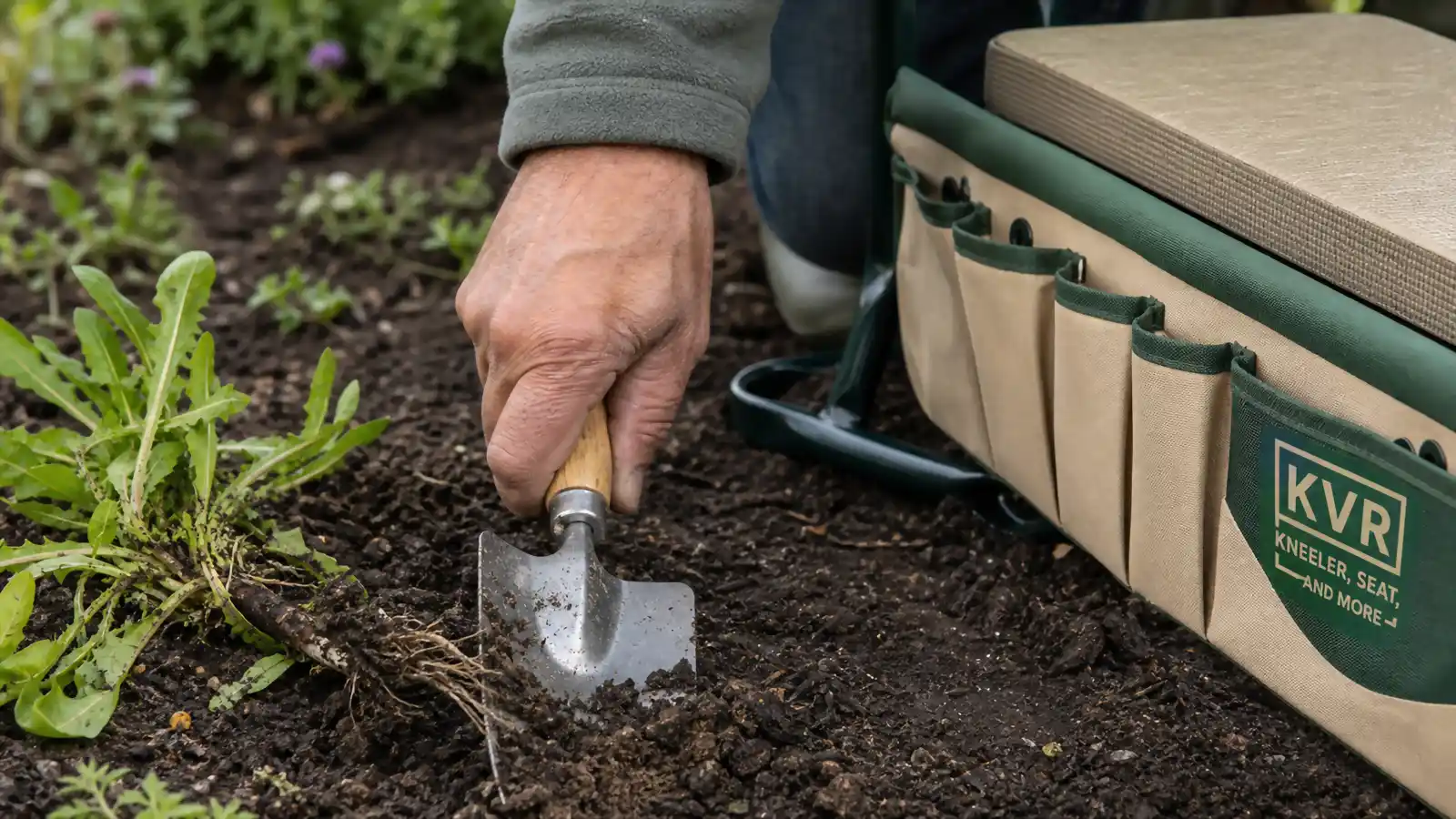
There's no faster way to turn one weeding session into three than snapping the top off a weed and leaving the root in the ground. It grows right back, usually within the week, and now you're back on your knees doing the same patch you already did. I keep a narrow hand trowel in one of the KVR's tool pouches specifically for this, and I use it to loosen the soil around a stubborn root before I pull, especially with anything that's got a taproot like dandelion or dock.
June likes to help with this part when she's out with me, mostly because pulling a weed and seeing the whole root come up feels like winning something to a six-year-old. I tell her the same thing every time, grip low near the base of the plant, not up by the leaves, and pull steady instead of yanking. A steady pull with damp ground underneath, which is why Step 1 matters so much, brings the root up clean far more often than a hard yank does.
Some weeds give up their whole root system with one steady pull, and others, especially anything that's been established along the boxwood row for a season or two, need the trowel worked all the way around before anything comes loose. I'd rather spend the extra thirty seconds loosening the soil than yank half a root off and leave the rest to sprout again by the following weekend. Patience here saves a repeat trip to the same six inches of ground.
Step 4: Alternate Kneeling and Sitting So No One Position Lasts Too Long
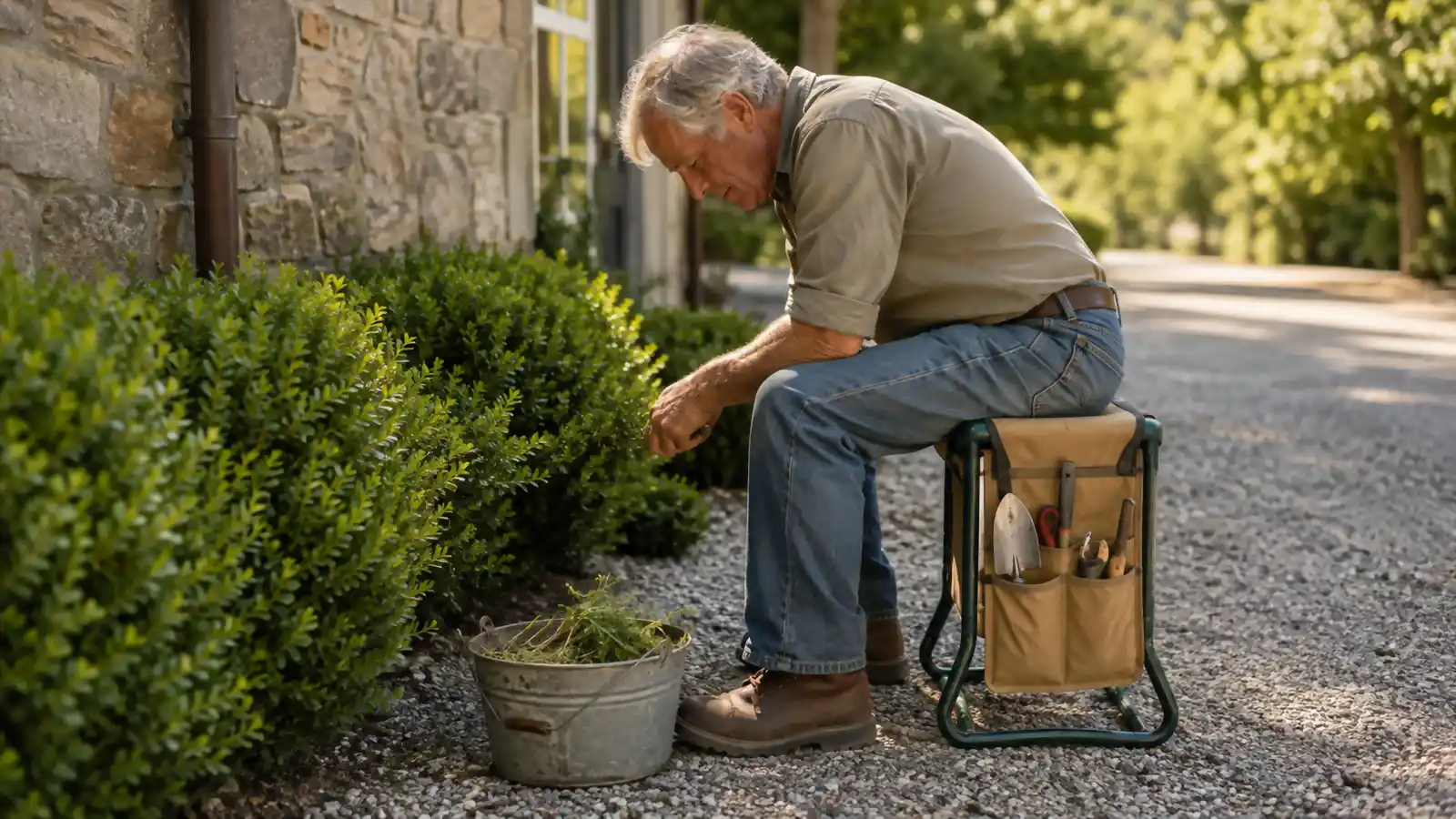
This is where the KVR earns its keep more than anywhere else in the process. I don't stay in the kneeling position for a whole section anymore. I'll kneel for a stretch, then flip the frame over and sit for a while working the same row, deadheading or clearing lighter growth at bench height where kneeling doesn't make much sense anyway. Switching positions before I feel like I need to is the habit that actually keeps me out in the beds longer, not any single piece of gear.
I used to push through on my knees until my legs told me to quit, and by then I was done for the day whether I wanted to be or not. Now I set a rough limit for myself, somewhere around fifteen or twenty minutes kneeling before I flip the KVR to the seat side, work from there a while, then go back down when I'm ready. The seat also gives me somewhere solid to prop myself against when I do go back to kneeling, which matters more than I expected when I first bought the thing.
The side rails are what make getting up off the ground manageable at all. I press down on the steel frame instead of trying to push up off bare ground or my own knees, and that's the difference between standing in one motion and having to work at it in stages the way I used to on a flat foam pad.
Step 5: Set Your Tools Within Arm's Reach, and Mulch Behind You As You Go
Every extra trip back to the shed for a trowel or a bucket is a trip where I'm standing up and getting back down again, and that adds up faster than people think. Before I start a section now, I lay out everything I'll need within arm's reach, a hand trowel, a bucket for pulled weeds, and a bag of mulch if I'm planning to finish the section that day. The two pouches on the KVR hold the trowel and a pair of snips without me setting them down in the grass and losing track of them.
The mulch part matters more than people give it credit for. I work forward through a section pulling weeds, and I mulch behind myself as I go instead of waiting until the whole bed is weeded to circle back. That way the ground I already cleared stays clear instead of a fresh crop of weeds coming up behind me while I'm still working the far end of the bed. It's the difference between a weeding session that holds for a few weeks and one that's undone again inside of ten days.
What Else Helps
A sharp hand trowel does more for you than a dull one, and it's worth keeping one just for this job instead of whatever's been dragging around the truck bed all season. I also keep an old pair of Delia's garden gloves in the shed for when the ground's still a little damp from the night before, since bare hands in cool wet clay get uncomfortable faster than the rest of you does. And if you're weeding around something you actually want to keep, like the row of boxwoods along our drive, go slow enough to be sure of what you're pulling before it's out of the ground. I've lost a few things I meant to keep over the years by moving too fast in a section I hadn't looked at closely enough.
Timing matters by season too, not just by the last rain. Early spring weeding in cooler ground is easier than the same job in August, when the clay bakes hard between rains and the heat itself wears you down faster than the kneeling does. If I've got a choice, I try to get ahead of the worst of it in April and May, when the beds haven't fully filled in yet and a weed pulled early doesn't turn into three weeds by July.
If you want the fuller rundown of how the KVR held up over two growing seasons of use, from planting through the last frost, I put it all together in this long-term review. And if you're still weighing whether a kneeler and seat combo is worth the room it takes up in your shed, I laid out the specific reasons it earns its keep in this list.
The trick was never finding a tool that does the weeding for you, it's finding one that lets you stay down there long enough to finish the job right.
The Method Works Better With the Right Thing Under Your Knees
Timing, small sections, and knowing when to switch positions will get you through a flower bed. A stable kneeler and seat is what makes switching positions actually easy. See the current price and rating on the KVR kneeler and seat.
Amazon Check Today's Price on Amazon →