

I'll say this up front: the BLACK+DECKER string trimmer worked on the first pull, and it's still working now, three seasons in. But if you've read a stack of five-star reviews and expected something close to magic, I want to tell you the two things nobody mentioned to me before I bought it, because I wish someone had. I'm Emmett Braddock, 71, and I've gardened this same half-acre outside Burlington, North Carolina for 38 years. The grass along my fence line and around the boxwoods got away from me every spring until I picked up the BLACK+DECKER BESTA510 three springs ago, mostly because Delia was tired of me dragging the old gas trimmer out of the shed and fighting the pull cord for ten minutes before it caught.
This isn't the article where I tell you it's the greatest thing to happen to my pegboard wall since I put it up. I already wrote the long-term review after three seasons with it, and that one leans positive overall. This one is the parts that don't make it into a five-star writeup. Two real drawbacks nobody warned me about, a few smaller annoyances that add up over a Saturday, and a couple of places where it did better than I expected going in.
The Quick Verdict
A genuinely lightweight, low-fuss trimmer and edger for a half-acre with mostly flat ground, but the cord and the auto feed both cost you something the listing photos don't show.
Amazon Check Today's Price →If dragging a gas trimmer out of the shed every Saturday is the real reason your fence line looks the way it does by June, this is the fix.
The BLACK+DECKER trimmer starts on the first squeeze every time, no gas, no mixing, no pull cord. Read the honest version below before you decide, then check today's price if it sounds like your yard.
Amazon Check Today's Price on Amazon →How I've Used It
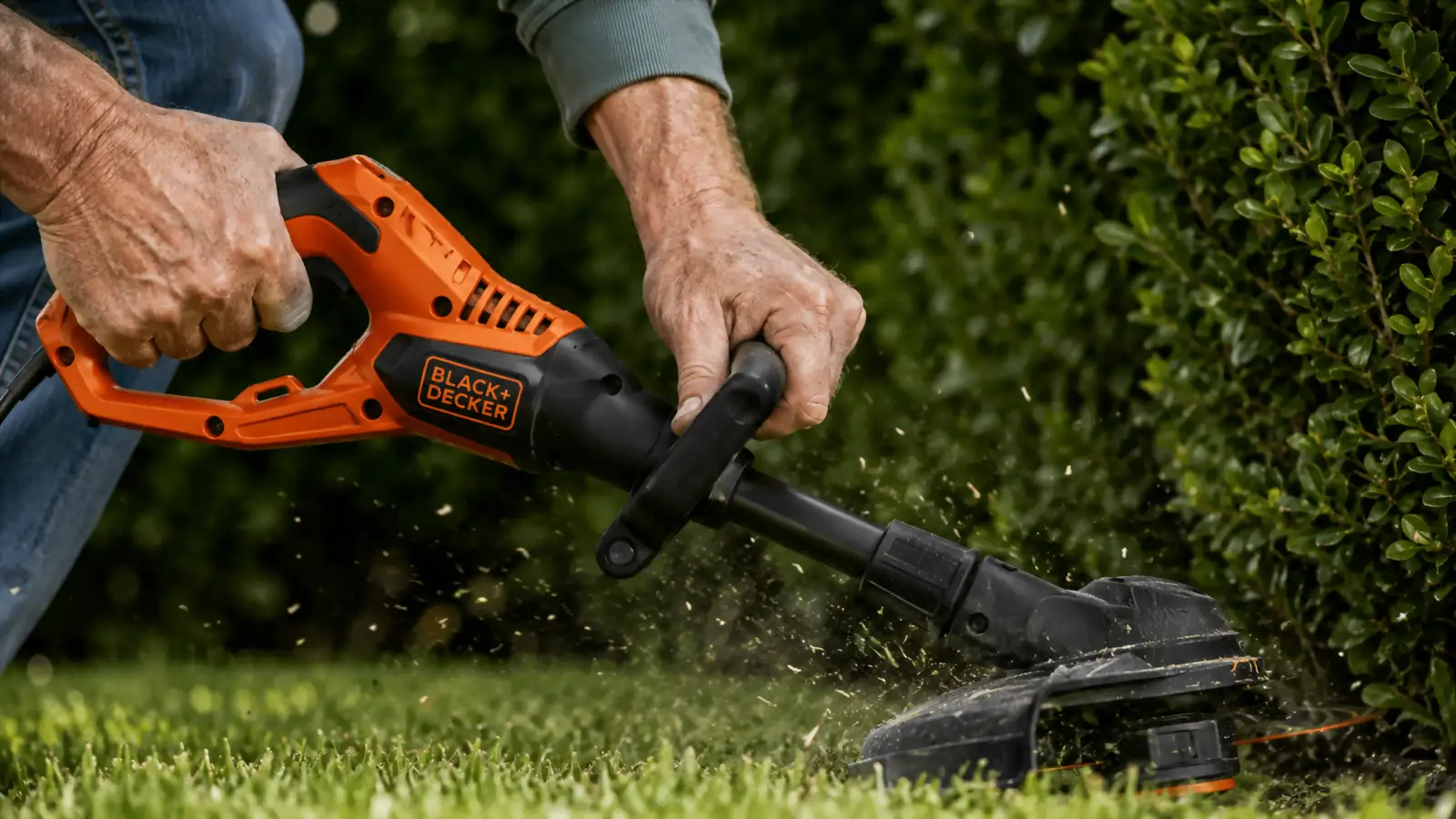
My half-acre hasn't changed shape in 38 years, but the trimming load has, since I built two raised beds back in 2019 and the boxwood row along the drive keeps getting wider every time I let it grow out before a proper cut. I've run the BLACK+DECKER trimmer along the fence line, around the base of the willow oak where the mower can't reach, along the edges of both raised beds, and down the slope at the back of the lot where the grass tends to grow thicker because the water collects there. It's a corded electric, 6.5-Amp, with a 14-inch cutting swath, and it converts to an edger for the driveway. That's the whole job description, and for the most part it does that job.
I trim once a week during the peak growing season, usually a Saturday morning before it gets hot, and it takes me somewhere around 25 to 30 minutes to cover the fence line, the beds, and the base of the oak. The BLACK+DECKER trimmer weighs less than my old gas unit by a wide margin, which matters more to a 71-year-old shoulder than any spec sheet will tell you. That's the honest positive. Now let's get into what the reviews don't mention.
I looked at a couple of battery-powered trimmers before I settled on this one, mostly because I liked the idea of no cord at all. What kept me on the corded BLACK+DECKER was simple: I didn't want to think about charging a battery before every session, and I didn't want to run out of runtime halfway down the slope with grass still standing. A cord is a hassle in its own way, and I'll get into exactly how in a minute, but at least it never leaves me stranded mid-job the way a dead battery would.
The Cord Is the Real Catch
Here's the first thing nobody tells you clearly enough before you buy a corded electric trimmer: you are tethered. My outlet is on the outside wall of the shed, and the back slope of my lot is close to 80 feet from that outlet. I run a 100-foot outdoor extension cord to reach it, and that cord has to travel past the boxwood row, around the corner of the raised beds, and down the slope with me. More than once I've had to stop mid-job, walk back, and untangle the cord from a boxwood branch it snagged on without my noticing.
In June, Sawyer, my grandson, was helping Delia with the tomatoes in the raised bed while I trimmed nearby, and I nearly tripped over a loop of cord I'd let pool up near the bed corner. Nobody got hurt, but it's the kind of thing that makes you slow down and pay attention to where the cord is lying, every single time you use it. If your property is bigger than mine, or your outlets are farther from where you actually need to trim, that cord stops being a minor inconvenience and starts being the deciding factor. It's worth reading how a cordless option stacks up before you commit, and I laid that out in the comparison against a WORX trimmer if that's a real concern for your yard.
What I've settled into is a fixed order of operations. I start near the shed outlet, trim the boxwood row first while the cord has the most slack, then work my way out toward the fence line and finally down the slope, coiling cord back up as I retreat. It's not hard once you build the habit, but nobody told me I'd need a habit for it. The BLACK+DECKER trimmer itself never complains about the setup, it's purely a cord-management problem, and it's one every corded model in this class shares.
What the Auto Feed Actually Does
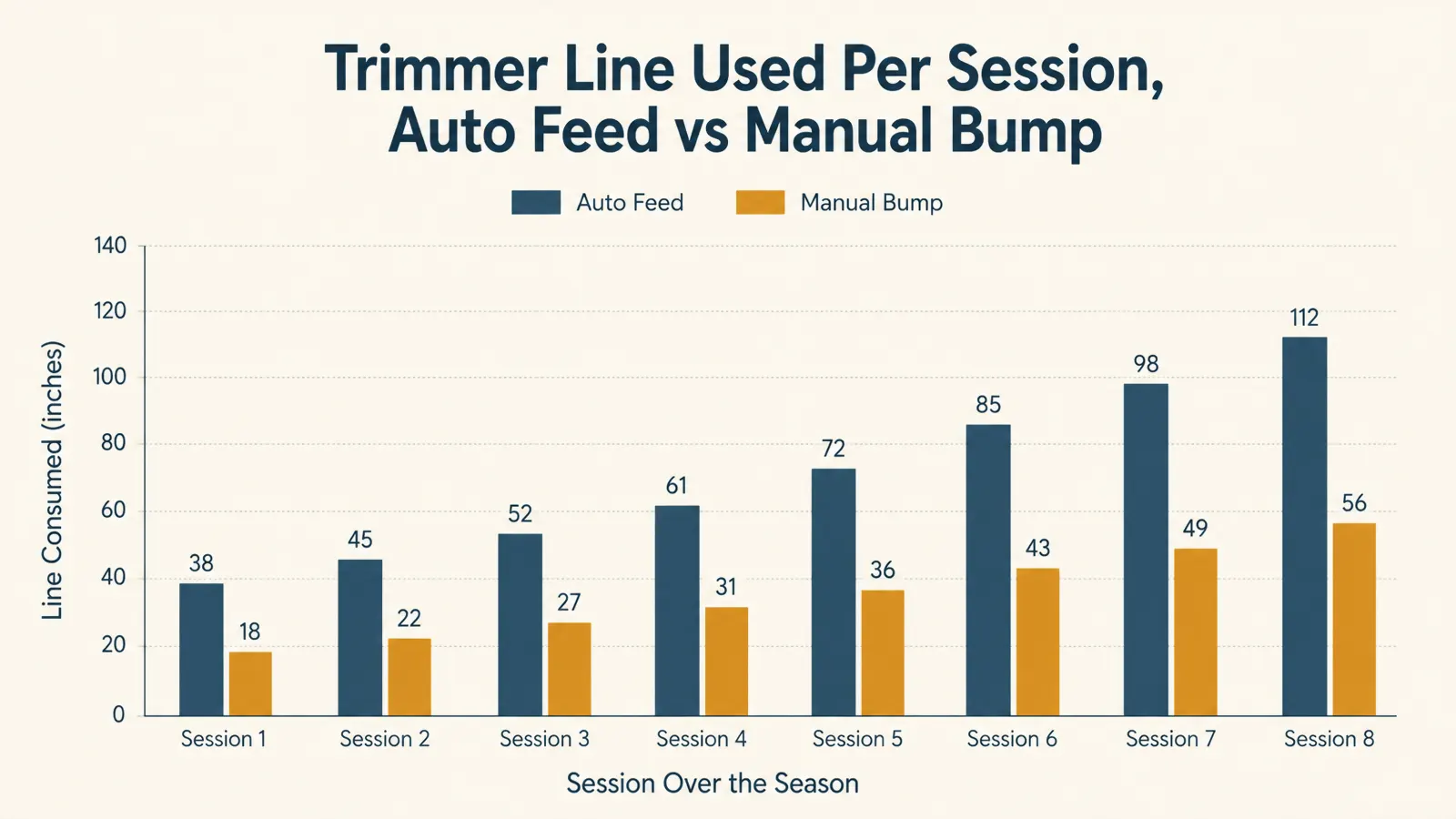
The auto feed is the feature the box leans on hardest, and it's also the second thing nobody explained to me straight. On a BLACK+DECKER trimmer with auto feed, the spool is supposed to release fresh line automatically as the old line wears down, so you never have to bump the head against the ground the way you do on older models. What actually happens, at least on mine, is that it tends to feed out more line than it needs to at once. The trim guard has a small cutter blade that whacks the excess back down to length, which means you're burning through line faster than you would with a manual bump-feed spool, especially on a day when I'm working the thicker grass down by the slope.
I've also had sessions where the opposite happens: the line doesn't feed at all, and I have to stop, power it down, and pull the spool cap off to loosen the line by hand before it'll release again. It's not a constant problem, maybe one session in six, but it's real, and it's exactly the kind of small friction that a glowing review skips right past. I keep two spare spools in the shed now because of it. That's a cost the auto feed marketing doesn't mention, and it's one I'd want a first-time buyer to know about before they're standing in their yard wondering why the line won't advance.
When I first unboxed the BLACK+DECKER trimmer, I honestly figured auto feed meant I'd never touch the spool again for the whole season. That's not the reality. It cuts down on the bump-and-stop dance you do with an older manual model, no question, but it trades that annoyance for a different one: keeping spare line stocked and occasionally babysitting the feed when it decides to sulk. I'd rather have this trade-off than the old way, but I wouldn't call it hands-off, and the packaging comes close to implying it is.
Switching to Edger Mode
The 2-in-1 claim is real, the BLACK+DECKER trimmer does rotate into an edger head, and I use that feature along the gravel driveway edge every couple of weeks. You loosen a collar, rotate the head 90 degrees, and a small guide wheel drops down to ride along the pavement edge while the line cuts vertically instead of horizontally. When it's lined up right, it leaves a clean, sharp edge between the grass and the driveway that I couldn't get with the trimmer in its regular position.
The catch is the conversion itself takes a little getting used to. The collar can be stiff, especially the first few times, and if you don't seat the head fully before locking it back down, the guide wheel wobbles and the edge comes out uneven. It took me three or four tries across the first couple of weeks before I stopped second-guessing whether I'd locked it correctly. It's not a deal breaker, but it's not the seamless one-click switch the packaging makes it sound like.
Before this trimmer, I edged the driveway with a hand edging tool, the kind you push with your foot and rock back and forth down the whole length. That job used to eat half an hour and leave my lower back sore for the rest of the day. With the BLACK+DECKER in edger mode, once the head is seated right, the same stretch of driveway takes closer to ten minutes standing up the whole time. That trade alone is worth the fiddly collar to me, even on the days it takes an extra minute to lock in.

Where It Beat My Expectations
For all the friction points above, there are two things the BLACK+DECKER trimmer does better than I expected. First, the weight. My old gas trimmer left my shoulder aching after a long Saturday, and this one doesn't, even after 30 minutes of continuous use along the fence line and beds. Second, Delia has picked it up and used it herself twice this season, which never happened with the gas unit, because she didn't want to deal with the mixed fuel or the pull cord. A trimmer that's light and simple enough for both of us to use without a learning curve is worth something, even with the cord and the feed quirks factored in.
The noise surprised me too. My old gas trimmer was loud enough that Delia could hear it from inside the house with the windows shut, and I always felt a little self-conscious running it early on a Saturday when the neighbors might still be asleep. The BLACK+DECKER trimmer is noticeably quieter, closer to a vacuum cleaner than a small engine, and June has stood nearby and watched me trim without me worrying about her ears. I still wouldn't hand her the trigger, she's 6, but I don't send her indoors the way I used to.
What I Liked
- Noticeably lighter than a comparable gas trimmer, easy on an older shoulder
- Starts instantly with a trigger squeeze, no mixed fuel and no pull cord
- Edger mode leaves a genuinely clean line along a driveway once you get the conversion right
- Quiet enough that I don't reach for ear protection every time
Where It Falls Short
- Corded, so you're managing a long extension cord across the whole yard every session
- Auto feed often overfeeds line, which burns through spools faster than a manual bump feed
- Some sessions the line won't advance at all and needs a manual reset
- The edger conversion collar is stiff and takes practice to seat correctly
The auto feed is supposed to save you the bump-knob dance, and most of the time it does, until it doesn't, and then you're standing there loosening a spool cap by hand anyway.
Who This Is For
If your property is a half-acre or smaller, your outlets are within reasonable extension cord range of where you actually trim, and you want something lightweight that starts every time without gas or mixing, the BLACK+DECKER trimmer fits well. It's a good match for anyone who does a weekly trim-and-edge routine rather than heavy daily brush clearing, and it's light enough that it doesn't wear out an older gardener the way a gas unit does.
It's also a reasonable pick if more than one person in the household is going to use it. Delia wouldn't touch the gas trimmer, and she'll run this one along the beds without asking me to start it for her first. If you've got a spouse, a grown kid, or anyone else who'd help with yard work if the tool weren't intimidating, that ease of use is worth factoring into the decision, not just the cutting performance.
Who Should Skip It
If your lot is big enough that a 100-foot cord won't reach the far corners, or you've got heavy brush and thick weeds to clear daily rather than a once-a-week maintenance trim, the cord and the line-feed quirks will wear on you faster than they wore on me. In that case it's worth reading how a cordless model compares before you buy, and I covered that trade-off directly in the BLACK+DECKER versus WORX comparison.
I'd also steer you away from it if you're the type who gets frustrated by small mechanical fussiness, the auto feed hiccups and the stiff edger collar are minor in isolation, but they do require a bit of patience across a season. If you want a tool you truly never think about, factor that in before you commit to this one.

Cord management aside, it's still the trimmer I reach for every Saturday.
Nothing above changes the fact that it starts on the first squeeze and saves my shoulder every week. If your yard is close enough to an outlet, it's worth a look at today's price.
Amazon Check Today's Price on Amazon →